
Full-Service Stadium Cleaning | C&J Environmental
Stadium cleaning is the crew work that takes a seating bowl and its concourses, restrooms and suites from the final whistle back to ready, starting as fans leave and continuing into the next day when the event calls for it. We bid it for stadium and arena operators, colleges, sports authorities and promoters after walking the venue, with every wave of the cleanup written into the scope.
- (844) 620-7505answered 24/7
- Warminster, PA
- Commercial cleaning · businesses only
- Clients served
- 1,100+
- Google rating, 26 reviews
- 5.0
- Emergency response
- 24/7
- 14 years in business, since 2012
- IICRC Certified Firm
- EPA Lead-Safe Certified Firm
- Crews timed to the game and after
- Top-row-down bowl picks and washdowns
- Priced by attendance, never by square foot
This page covers stadium cleaning from C&J Environmental for stadium and arena operators, colleges, sports authorities and promoters across Bucks, Montgomery and Philadelphia counties and nearby Burlington, Mercer and Hunterdon counties in New Jersey.
The work runs in waves: restroom and concourse service during the event, a bowl crew that picks from the top row down, blows small litter to the aisles and washes the seating after fans leave, and a smaller next-day crew for detail work.
The key point: venues are priced by attendance and turnaround, not by the square foot, and every contract is a custom bid written after a walk of the venue.
Why Clean a Stadium in Waves Instead of All at Once?
A stadium gets cleaned in waves because each part of the venue frees up at a different time: restrooms need service while the game is on, the bowl opens up the moment fans leave, and the slower detail work suits a morning shift the following day. A single crew asked to cover all of that in one shift either runs out of night or skips the rows nobody checks.
- Bowl picks begin at the uppermost row and descend, one section at a time
- Heavy bagged trash is hauled ahead of recyclables and cardboard
- Locker rooms get attention on the surfaces that touch bare skin
- Headcount set by the crowd
- Bowl, concourse and suites
- Built for operators and promoters
What Else Do Venue Operators Hand to C&J?
Where Can Venues Book C&J Stadium Crews?
What Gets Cleaned After a Big Crowd Leaves?
After a big crowd leaves, the work splits into three zones that crews take in a set order: the seating bowl first, then the concourses and concessions, and finally the restrooms along with the suites and team rooms.
Clearing the Seating Bowl Section by Section
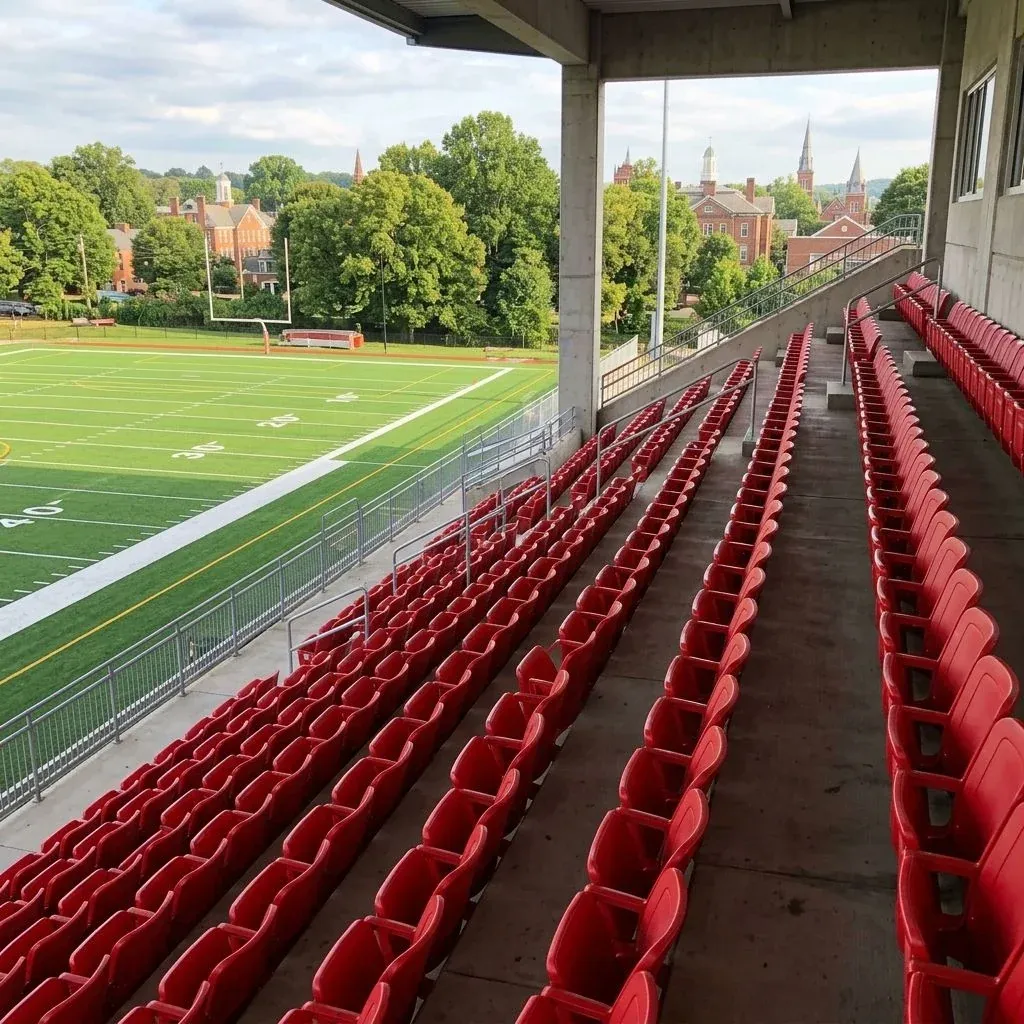
We clear a bowl the way an archived EPA study of one big-league ballpark records it being done, with pickers beginning in the uppermost row of each section and descending, bagging trays, cups and large litter by hand while bottles ride in a clear bag of their own. Behind them, a blower crew pushes shells and small debris down the rows and aisles to the bottom of the tier, or sweeps it there when wind or rain grounds the blowers.
Seats and steps are then hosed from the top of each section, and the rinse water follows the slope of the stands to drains built to catch it before it reaches the field. Pressure washers handle concrete, rubber and plastic surfaces and the stairwells wherever the drainage allows.
Concourses, Concessions and the Waste Order
Concourse bins are emptied and relined as soon as the gates clear, and tied bags are set out for carts that run them to the trash chute or the compactor. Crews then work the walkways with brooms and damp mops, paying closest attention to the spots where lines formed, and the floors behind concession stands get their spills and grease cleared before they dry and turn sticky.
Bagged trash goes out ahead of recyclables and cardboard, since it weighs the most and causes the most trouble if it sits, so it is moved while the crew still has its legs. Glass and reusable containers ride on carts of their own, and the hauler's truck takes away the compactor and recycling containers once every load is staged.
Restrooms, Suites and Locker Rooms
Restrooms need a crew while the game is still on and another once it ends: a dedicated team restocks and spot-cleans through the game, and the deep cleaning waits until fans leave and every stall can be reached. Suites, boxes and team offices get their own crew, since carpet, glass and upholstered seating call for different tools than the bowl does, and a suite holder notices a smudged window faster than anyone in the stands notices a stray cup.
Locker rooms are cleaned along the lines of CDC's guidance for athletic facilities, which has shared equipment wiped after every use and allowed to dry before the next athlete picks it up, with the focus on surfaces bare skin touches. CDC also notes there is little evidence that disinfecting everything prevents infections better than a targeted approach, which is the approach we take.
What Stadium Cleaning Services Do We Offer?
Venue contracts usually draw on these three services, scheduled around the event calendar.
- Bowl picking, litter blow-down and seat washdown
- Restroom checks through the event, deep clean after
- Suite, box and office cleaning
The same crew methods apply at college fields, high school stadiums, arenas and fairgrounds, wherever a large crowd leaves the stands behind. Team and venue names stay off this page, each scope is written for the building in front of us, and every venue account gets a named account manager.
How to Line Up a Cleaning Crew for Your Event Calendar
Walk the venue with us.
We tour the bowl, the concourses, the restrooms, the suites and the loading areas with your operations team, and note seat counts, levels and where washdown water can drain.
Get a bid built in waves.
The scope splits the work into in-event, post-event and next-day shifts, each priced as its own line, and it states what the venue supplies.
Crews arrive on the schedule in the bid.
Shifts start when the scope says they start, with the same background-checked crew assigned to your venue and a written checklist for its bowl, concourses and suites on every shift. A supervisor walks the venue on regular inspections, and our 24/7 line reaches us if a game goes to extra innings or a show runs past its curfew.
How Should Stadium Cleaning Be Split Across a Game Day?
Stadium cleaning should be split into waves across a game day: restroom and concourse service during the event, the bowl and the trash right after it, and a smaller crew the next day for seats and suites plus the food areas. Each wave has its own job, and none of them can borrow time from the others.
The post-event crew works against the hardest clock, because the bowl and the trash are at their worst the moment fans leave and the next event's load-in is already on the calendar. The last night of a series or a tournament can run late, so the bid should say how the crew handles a delayed finish.
We will not quote a venue by the square foot, and we will not promise a crew size we have not tied to attendance. Sports venues are usually not bid that way, as CMM's guide to bidding stadiums explains, because attendance, not square footage, is what generates the work.
Who Hires Stadium Crews, for Which Areas, and When?
Rather talk it through?
(844) 620-7505, answered 24/7
Who hires a stadium cleaning crew?
Stadium and arena operators, venue management companies, colleges, public sports authorities and event promoters hire a stadium cleaning crew, most often through a facility services manager. The Stadium Managers Association is one of the places those managers trade notes on running their buildings.
Which areas does the crew cover?
The crew covers the seating bowl and stands, concourses and walkways, restrooms, suites and boxes, team areas, concession and vendor spaces, and the parking lots where the contract includes them. Every area appears in the scope by name, along with the wave it belongs to, so the operator can see at a glance which crew owns which part of the building on any given night.
When do the crews work?
The crews work in three windows: during the event for restrooms and concourse bins, from the moment fans leave for the bowl and the trash, and the next day for the detail work. Doubleheaders, tournaments and multi-day festivals get a schedule built around their own gaps.
How Much Does Stadium Cleaning Cost?
Stadium cleaning costs what a bid built around your attendance and your event calendar adds up to, since the crowd, the seat count and the turnaround window set the size of every crew. We price after walking the venue and reading the season's schedule, and we publish no rate because two events in the same stadium can leave very different work behind.
- Attendance, seat count and the number of concourse levels
- Restrooms, suites and the turnaround before the next event
- Waste streams, hauler pulls and next-day shift hours
- Why does a sellout cost more to clean than a half-full night?
A sellout costs more to clean than a half-full night because every extra fan adds trash to the bowl, visits to the restrooms and weight to the haul, and a longer event stretches all of it. Crew counts in the bid follow expected attendance for exactly that reason.
- Can the morning-after shift be dropped for small events?
The morning-after shift can be dropped for small events, and for that reason it is priced separately: its work on seats, suites and the food areas happens in daylight and depends on how the night went and what the venue has booked next. An operator can keep it after a sellout and skip it after a quiet night.
- Which equipment and access does the venue provide?
The venue provides whatever the scope assigns to it, which typically means access, the trash chute and compactor, the hauler's containers, water for washdown and a place to stage carts. The bid also states who buys paper, soap and liners, so the first night never stalls over a missing key or an empty roll-off.
When Does Your Next Season or Event Start?
Tell us when your next season, tournament or show begins, and we will walk the venue with your operations team before the first gates open, while there is still time to adjust the plan. Send the seat count and this season's event count through the form or our 24/7 line, and expect month-to-month terms with no long-term contract, an annual agreement on request for a full season, and a certificate of insurance whenever you ask.