
Water Damage Restoration in Trenton, NJ
Water damage restoration in Trenton, NJ starts with a call to our 24/7 line, in a county FEMA has named in nine flood or tropical-storm disaster declarations from 2004 through the remnants of Ida in 2021. Whatever let the water in, our first job on site is stopping the flow wherever that is safe and securing the space.
- (844) 620-7505answered 24/7
- Warminster, PA
- Restoration · homes and businesses
- Clients served
- 1,100+
- Google rating, 26 reviews
- 5.0
- Emergency response
- 24/7
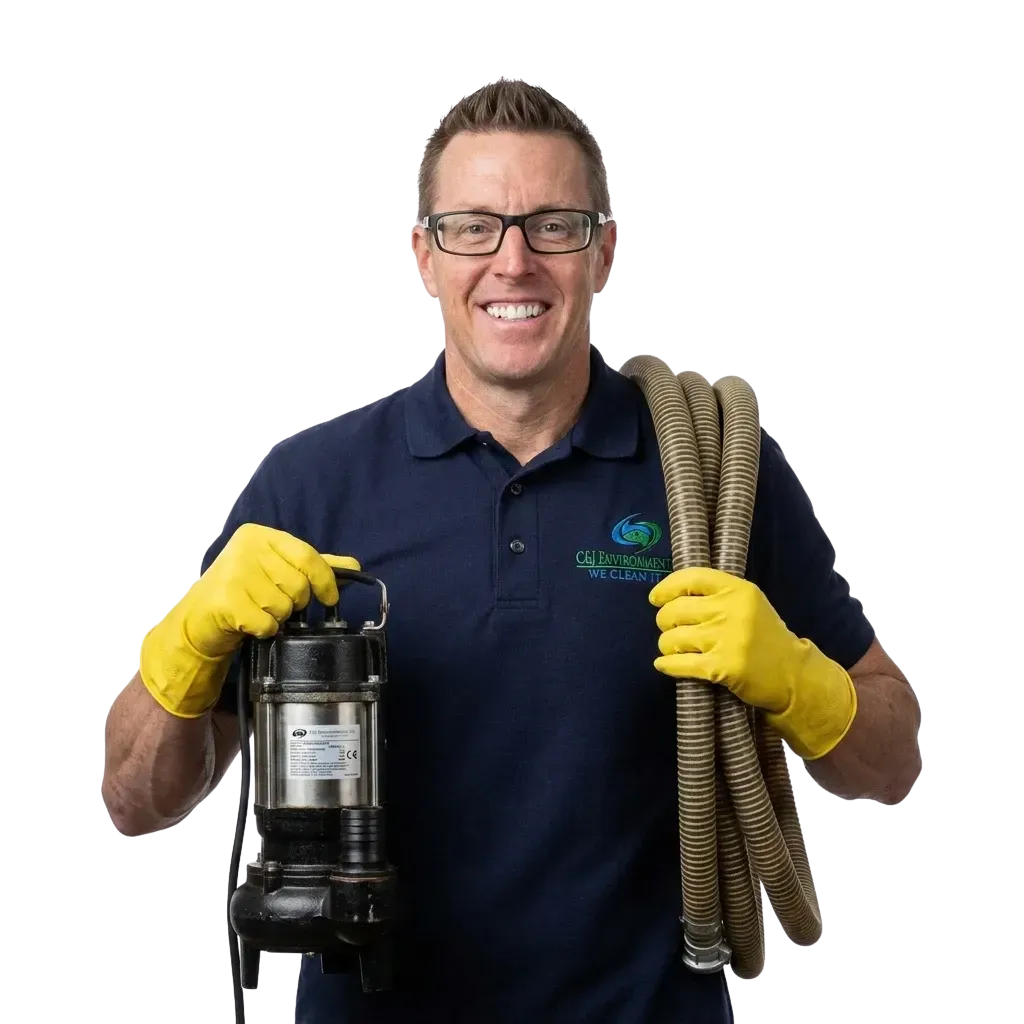
- 14 years in business, since 2012
- IICRC Certified Firm
- EPA Lead-Safe Certified Firm
This page covers water damage restoration for houses, apartment buildings and businesses in the City of Trenton, where the Delaware River turns tidal at the Falls and Assunpink Creek runs in a canal channel past the Transit Center.
C&J Environmental answers its line 24/7, pumps out standing water, sets the IICRC water category on site and dries the structure against daily moisture readings. It removes only what cannot dry, and it is both an IICRC Certified Firm and an EPA Lead-Safe Certified Firm.
Keep this figure in mind: national cost guides list sewage backup cleanup at $450 to $16,000, a market band rather than a quote for one Trenton loss.
Why Can't Trenton Water Damage Wait Until Morning?
Trenton water damage can't sit until morning, since EPA's drying deadline for wet materials is 24 to 48 hours from the moment the water arrives. A pipe that splits during a Trenton winter, which brings 26.6 inches of snow in an average year at the airport station, turns into a much bigger job by the weekend.
- Mercer County shows up in nine FEMA flood and storm declarations, from DR-1563 to DR-4614
- Assunpink Creek runs in a canalized channel past the Trenton Transit Center to the Delaware
- Sewage and rising river water handled as Category 3 from the first visit
- A line answered 24/7
- Readings written into a daily log
- Photos taken before cleanup
What Do Our Customers Say?
5.0 on Google from 26 reviews
On time and within budget
Tom T.Google review
Stellar customer service and quick turn around time
Angela T.Google review
Great work, was quick and professional. As a local Realtor I will be using them in the future!
Robby D.Google review, local Realtor
Get your free estimate request sent in 60 seconds!
Water Damage Restoration in Trenton? See Who Trusts C&J
















What Follows Water in a Trenton Building?
Which Nearby River Towns Share the Same 24/7 Line?
What Does Water Damage Restoration Involve in Trenton?
Water damage cleanup and drying in Trenton involves three stretches of work: stopping and recording the damage, a drying run measured every day, and a decision about every wet material.
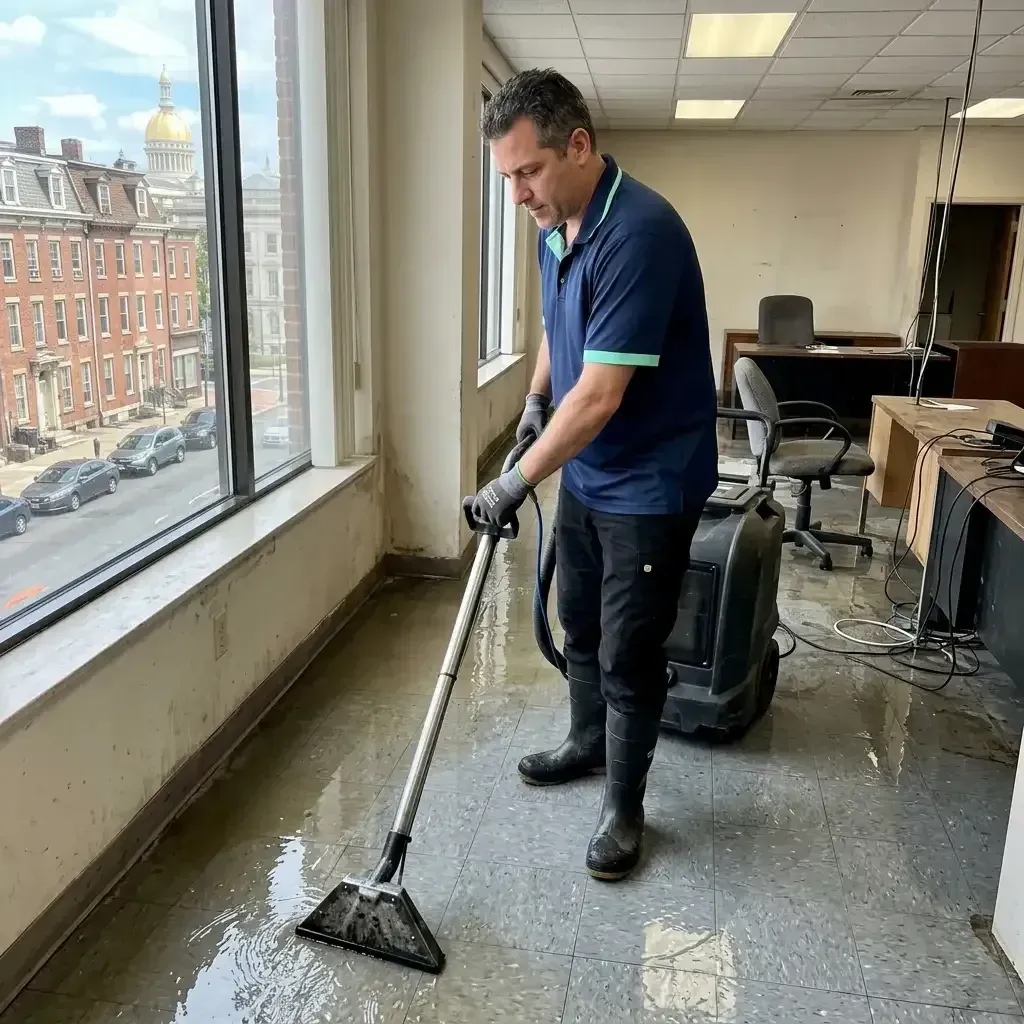
Stopping the Water and Recording the Damage
Safety leads every Trenton call: shut the water at the main only if the valve sits somewhere dry, and leave the breakers off for any flooded room. CDC's advice on floodwater is short, stay out of it, because nobody can say for certain what it is carrying.
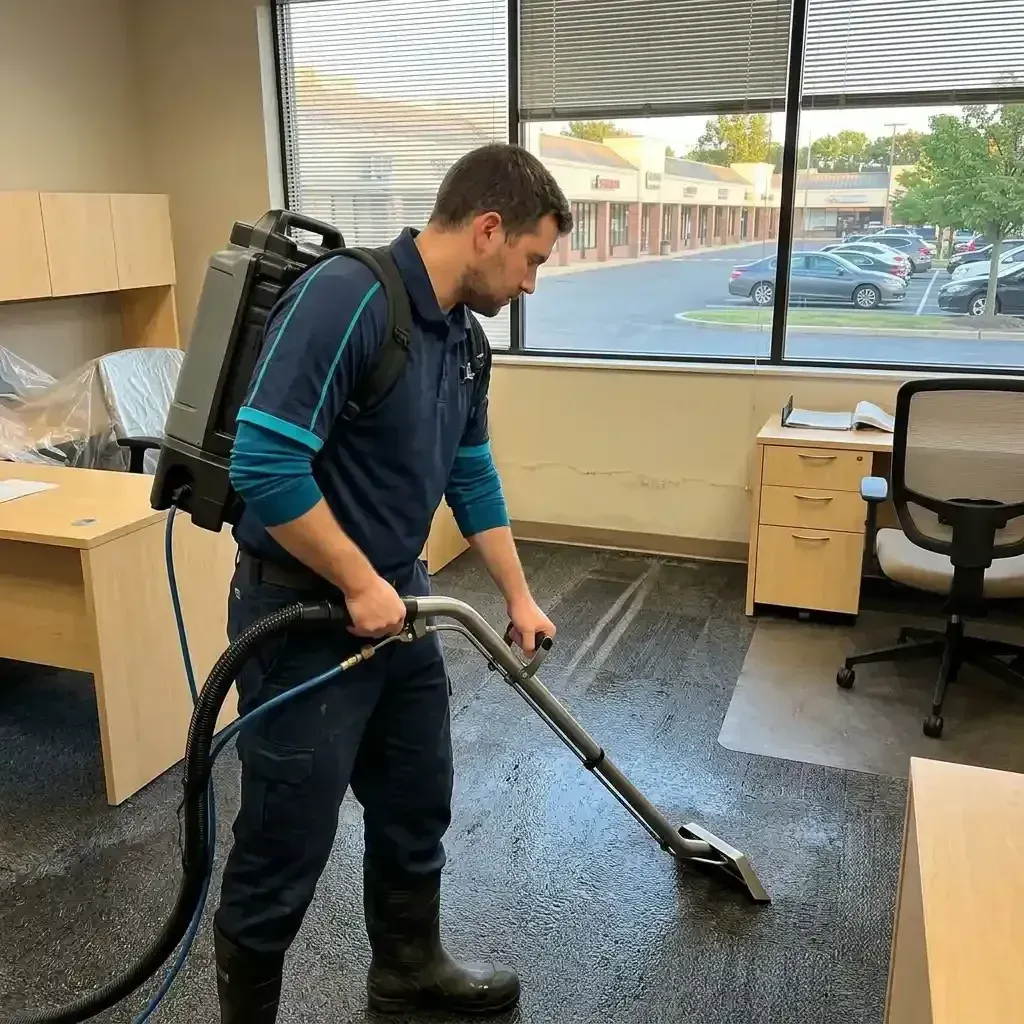
EPA tells owners to call their insurer and photograph the damage before cleanup begins, so we photograph each wet room in your Trenton building as soon as we walk in. Then pumps and commercial wet vacuums pull out the standing water, since no drying can start while it still covers the floor.
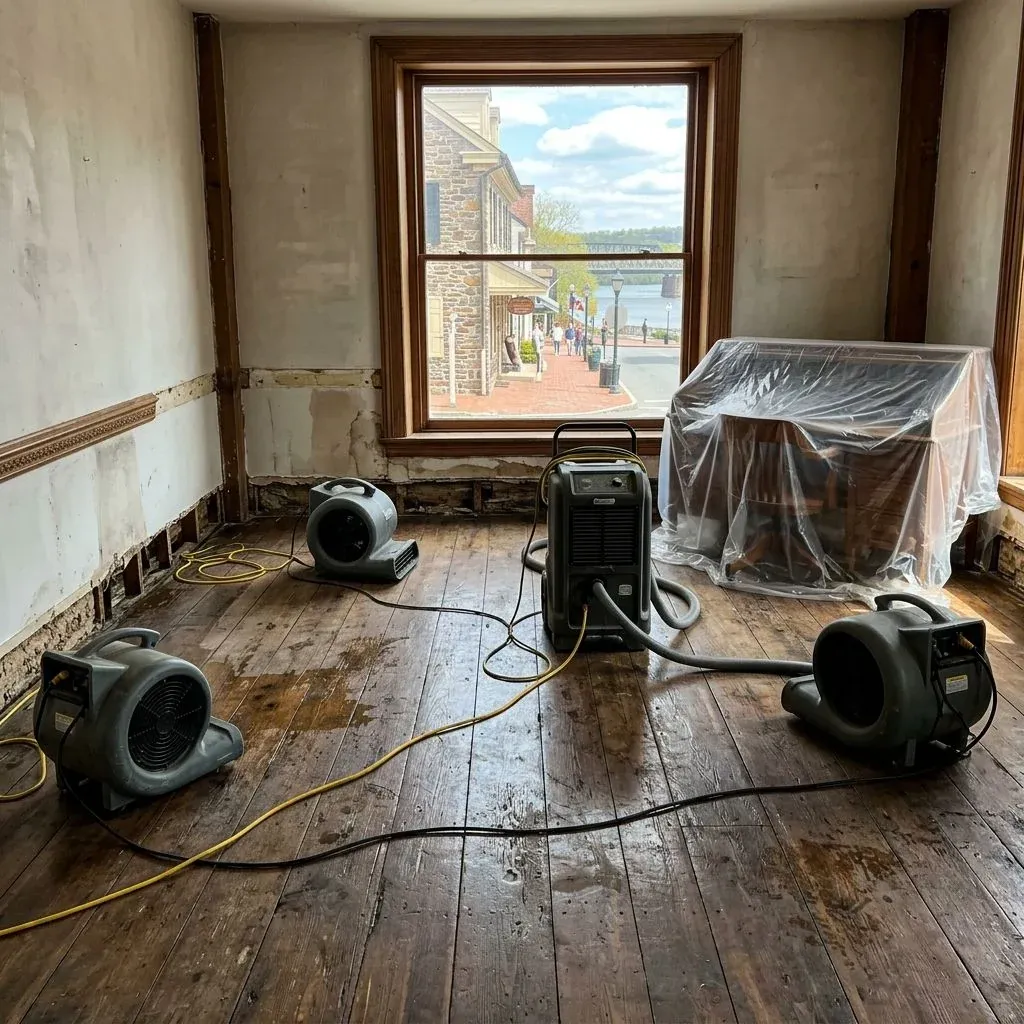
Drying to Numbers, Not to a Calendar
The IICRC S500 standard sorts water by contamination: Category 1 starts out clean, from a supply line or melting snow, Category 2 holds enough contamination to sicken someone, as washer discharge can, while Category 3, the grossly contaminated class, takes in sewage and rivers over their banks. Rain or a roof leak is not Category 3 by default, so we set the category inside your Trenton building after looking, and that call decides which materials can dry in place.
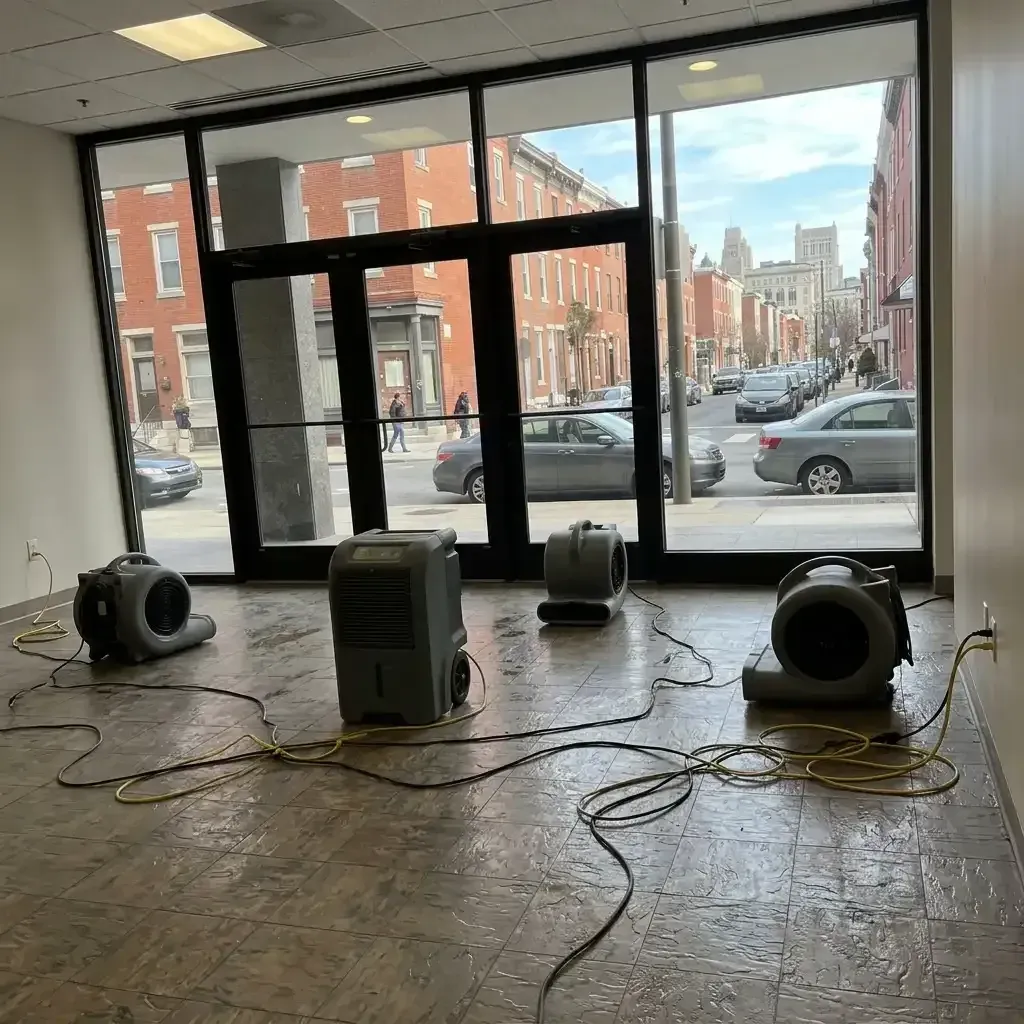
Air movers, low fans set along wet walls and floors, speed the water into the air, where dehumidifiers condense it and drain it away. Every day we read the plaster, framing and subfloor and record the numbers in a drying log, and the machines leave when those readings say dry.
Deciding What Stays and What Comes Out
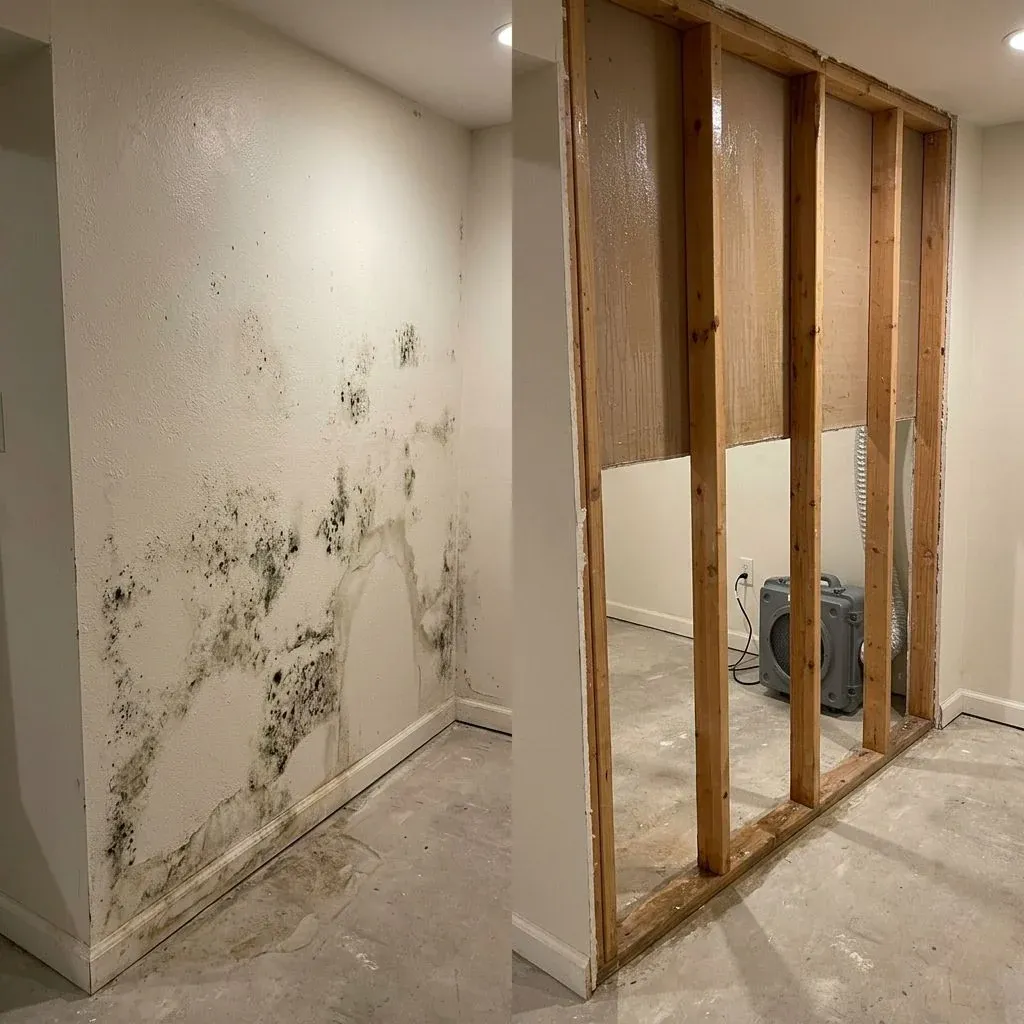
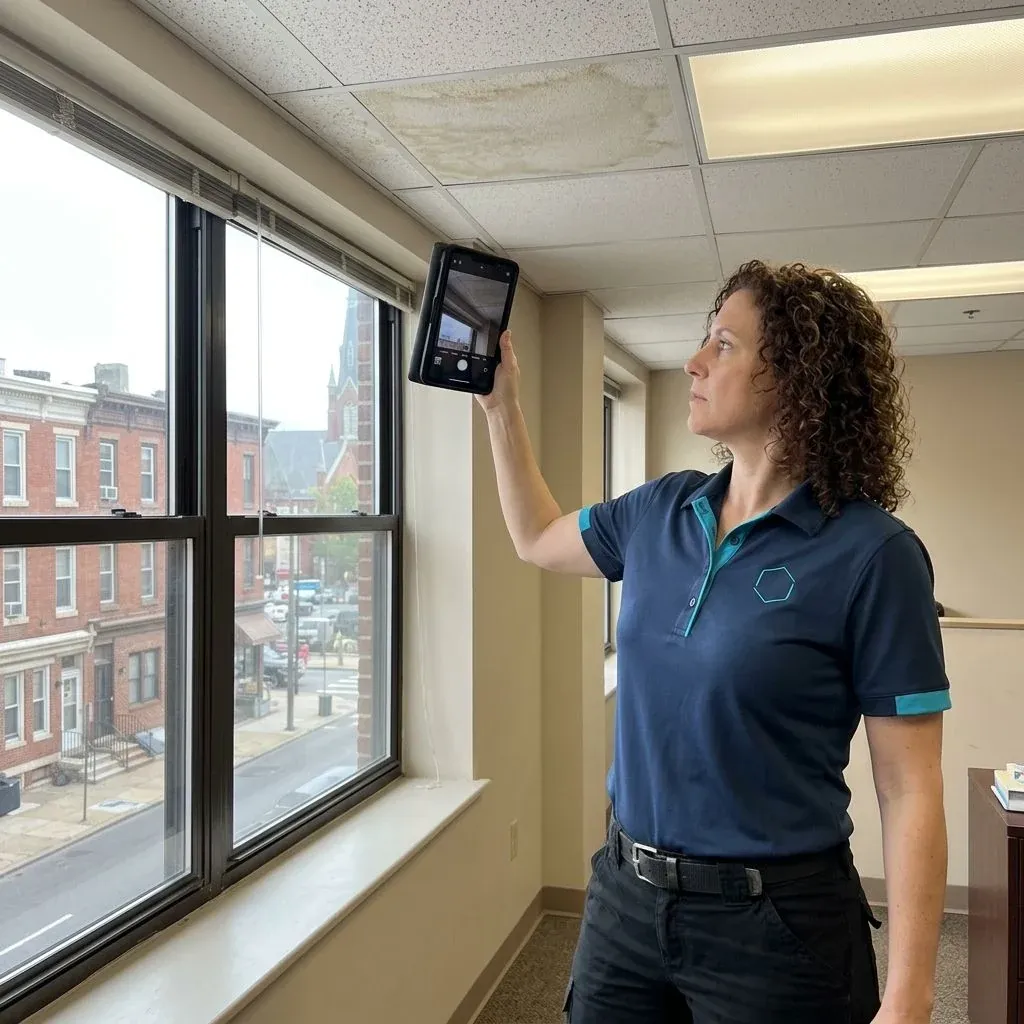
EPA's cleanup table goes material by material: soaked ceiling tiles and insulation get replaced, while drywall with no swelling and tight seams can often dry where it hangs. When a Trenton wall does need opening, the drywall is cut level just above the water line, known as a flood cut, and the wet bottom comes off so the cavity can breathe.
With 79.3 percent of Trenton's housing built before 1980, many of those cuts expose paint from before 1978, which EPA's lead renovation rule covers, and our crew contains that dust as the rule directs for an EPA Lead-Safe Certified Firm. If the open wall shows mold, the work moves into our remediation process, and you may bring in an independent inspector to clear it afterward.
What Water Damage Services Do We Offer in Trenton?
Calls from Trenton buildings usually fall under one of these three services.
- Sewage backups cleaned up as Category 3
- Burst supply lines and appliance leaks dried
- Wet plaster, flooring and contents sorted
The Delaware River turns tidal at the Falls of the Delaware in Trenton, and the Delaware and Raritan Canal flows beneath Mulberry Street. If the river or a creek gets into a building, everything porous it soaked is handled as Category 3.
How to Handle a Leak or Flood in a Trenton Building
Phone us at any hour.
On the first visit we shut off the source if that is safe, protect what we can and nothing more happens until a written estimate is in front of you and you have approved it in writing.
Pump, then dry and measure.
Standing water comes out first, then the drying equipment is set, with moisture readings logged daily where you can see them.
Proof of dry, then repairs on their own paper.
Once the readings say dry, you receive the log and photos, and whatever plaster, flooring or trim was removed gets a separate written price.
Who Needs Water Damage Restoration in Trenton, NJ?
Water damage restoration in Trenton, NJ is for anyone whose plaster, drywall, flooring or insulation is still wet beyond EPA's 24 to 48 hour drying limit, from a split radiator pipe to a basement full of runoff. Household fans move air across a surface, but they do little for water soaked into a wall cavity or held under a floor.
A musty smell is a late signal, not a starting gun. EPA's guidance on flooded homes says items that stay wet longer than two days usually grow mold, so by the time a room smells, the drying is already behind.
Our line on Category 3 does not move: carpet, pad, drywall and insulation soaked by sewage or by rising creek or river water are bagged and removed, not dried. Hearing that on day one spares a Trenton owner the cost of drying plaster that will be torn out in any case.
When Should Trenton Owners Call, and Where Does Water Go?
Rather talk it through?
(844) 620-7505, answered 24/7
When should a Trenton owner call about water?
A Trenton owner should call the minute the leak is under control, at whatever hour that happens to be. EPA's drying clock of 24 to 48 hours starts with the leak, and we aim to be in the city with a crew within 2 hours of your call so less of that clock is lost.
Where does water travel inside a Trenton rowhouse?
Water inside a Trenton rowhouse travels down, along the joists and through the ceilings, so a second-floor bath leak often first shows as a stain in the kitchen below. We read the floor under the source and the wall behind it as well as the room where the leak began.
Who makes the drying decisions in a Trenton office or store?
The owner or the property manager makes the drying decisions in a Trenton office or store, and we plan the loudest equipment around the hours customers and staff need the space. Each tenant is told which rooms are off limits while the dehumidifiers run.
How Much Does Water Damage Restoration Cost in Trenton?
Water damage restoration in Trenton costs $450 to $16,000 when a sewage backup has to be cleaned up, $3 to $4 per square foot when clean water is dried out, and $1,200 to $3,800 when mold turns up inside opened walls, by published market ranges. These are national figures, taken from cost guides like Fixr and not from C&J's billing, and your written estimate follows a look at the wet rooms.
| Loss | What it usually means | Market range |
|---|---|---|
| Sewage backup cleanup | a drain or sewer line pushing waste onto a lower floor | $450 to $16,000 |
| Clean water (Category 1) | a supply line, a water heater or melting snow, dried in place | $3 to $4 per square foot |
| Mold found once walls are open | growth uncovered behind wet drywall and handled as remediation | $1,200 to $3,800 |
National averages drawn from many losses, not a price for your building. Rebuilt plaster, drywall and floors are quoted once the readings reach dry.
- Why does sewage cost so much more than a pipe leak?
Sewage costs more than a pipe leak because Category 3 cleanup adds protective gear, barriers against cross-contamination and the removal of every porous material it touched before drying can start. Category 3 jobs come to $7 to $7.50 per square foot in cost guides, roughly double the clean-water band.
- What do extra drying days add to the bill?
Each extra day of drying adds the daily charge for the air movers and dehumidifiers, since those machines bill until the wood and plaster read dry. Old plaster and masonry can hold water longer than drywall, and the daily log lets you watch those numbers fall.
- What paperwork does a Trenton owner get for the insurer?
A Trenton owner gets dated photos of every wet room, the daily moisture log and an itemized estimate, all of it ready to send to the insurer. Coverage is the insurer's decision under your policy, and you file and handle the claim yourself.
What Do You Do While Water Is Still Coming In?
While water is still coming into a Trenton building, call our 24/7 line and shut the water off at the meter if you can get there without wading. Once the leak has stopped, you can also send the estimate form, and that visit is free.