
Water Damage Restoration in Bucks County, PA
Water damage restoration in Bucks County, PA is a round-the-clock service in a county named in eight federal flood and storm disaster declarations between 1996 and 2021, Hurricane Floyd, Irene, Tropical Storm Lee and the remnants of Ida among them. Somebody picks up our line at any hour, and the crew's opening task is cutting off the source so people can move through the building safely.
- (844) 620-7505answered 24/7
- Warminster, PA
- Restoration · homes and businesses
- Clients served
- 1,100+
- Google rating, 26 reviews
- 5.0
- Emergency response
- 24/7
- 14 years in business, since 2012
- IICRC Certified Firm
- EPA Lead-Safe Certified Firm
This page covers water damage restoration for homes and businesses across Bucks County, Pennsylvania, a Delaware River county whose Neshaminy Creek floods at a stage of 9 feet near Langhorne.
C&J Environmental runs a 24/7 line, stops the water, extracts it, sets drying equipment by the category and class of the loss and records moisture readings each day until materials test dry. It is an IICRC Certified Firm and an EPA Lead-Safe Certified Firm for cuts into older walls.
Keep in mind that sewage cleanup lists at $450 to $16,000 in national cost guides, a wide market range that reflects how much the water reached.
Why Do Bucks County Water Jobs Need a Daily Drying Log?
Bucks County water jobs need a daily drying log because the log is the only proof that hidden water inside walls and floors is leaving, and drying equipment is billed for each day it runs. A written record of every reading also puts the same numbers in front of you, your insurer and our crew.
- Cuts into older painted walls by an EPA Lead-Safe Certified Firm
- Eight federal flood and storm disasters named the county from 1996 to 2021
- Neshaminy Creek near Langhorne floods at 9 feet, with 170 recorded floods from 1933 on
- Phone answered around the clock
- A reading logged every day
- Water category set on site
What Do Our Customers Say?
5.0 on Google from 26 reviews
Stellar customer service and quick turn around time
Angela T.Google review
On time and within budget
Tom T.Google review
Excellent customer service, easy to work with, very happy with results!
Heidi B.Google review
Get your free estimate request sent in 60 seconds!
Water Damage Restoration in Bucks County? See Who Trusts C&J
















What Do Bucks County Owners Need After the Drying?
Which Bucks County Towns Have Water Damage Pages?
What Does Water Damage Restoration Mean in Bucks County?
Our water damage restoration work in Bucks County means three jobs done in order: make the building safe and get the water out, dry the structure to measured readings, and decide what has to be removed.
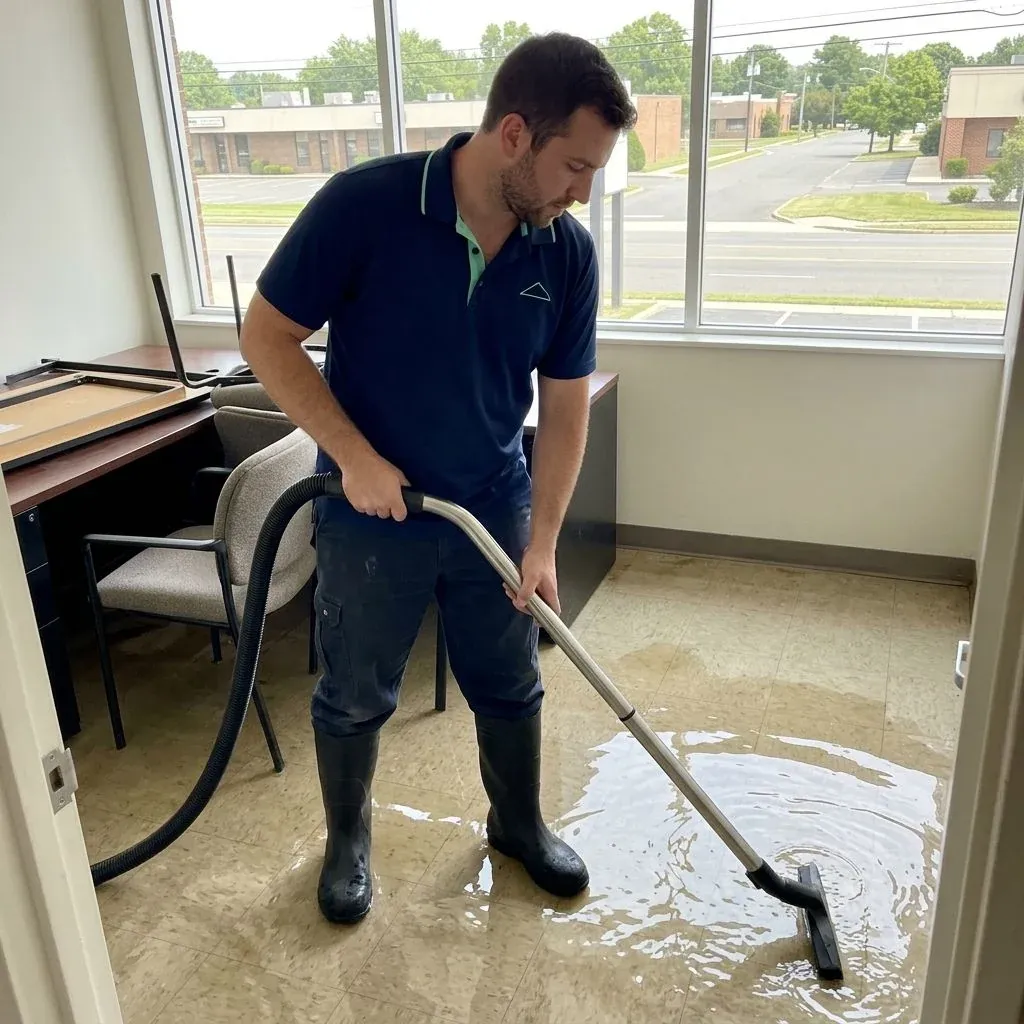
Safety and Extraction After Bucks County Floods
People and power come first: the supply valve gets closed where it can be reached from dry ground, wet rooms stay without electricity, and nobody wades through floodwater, which CDC warns can carry sewage and chemicals. During a declared storm, instructions from the county's Emergency Management Agency come before any cleanup.
We photograph the wet rooms before touching them, the record EPA tells owners to keep for their insurance company. Standing water then leaves through pumps and extraction wands, because drying equipment cannot do its job over a flooded floor.
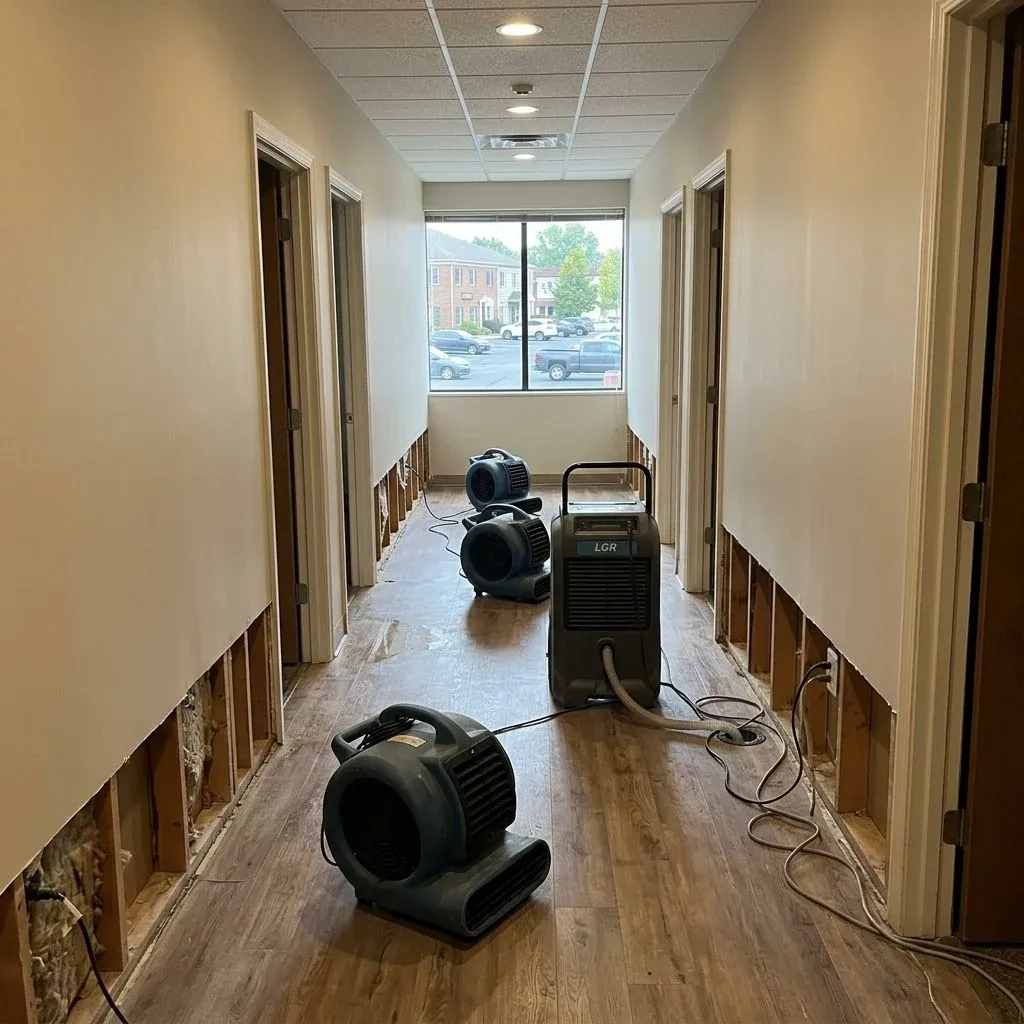
Drying Bucks County Buildings by Category and Class
Under the IICRC S500 drying standard, the first question is how dirty the water is: a burst supply line starts as Category 1 because the water was sanitary, an overflowing washing machine counts as Category 2 because it can cause illness, and sewage or a Neshaminy Creek flood belongs in Category 3. Wind-driven rain through a roof or window gets judged in the building, because the standard's own committee stated in 2026 that weather-related water is not Category 3 by default.
The second question is the class, meaning the size of the drying job, which runs from a corner of one room to saturated plaster, hardwood or concrete that calls for specialty methods. We size the dehumidifiers and air movers to that class and log each day's readings until the materials test dry.
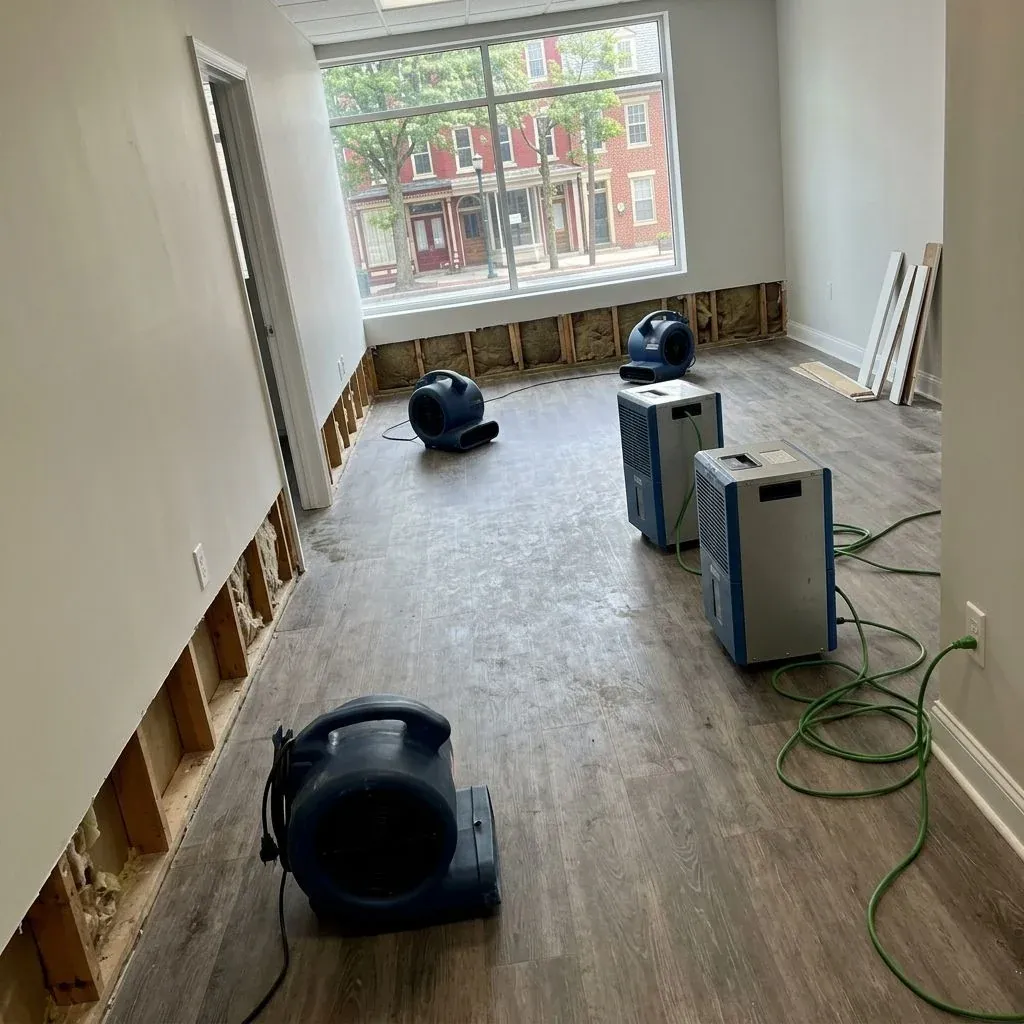
What Comes Out of a Wet Bucks County Building
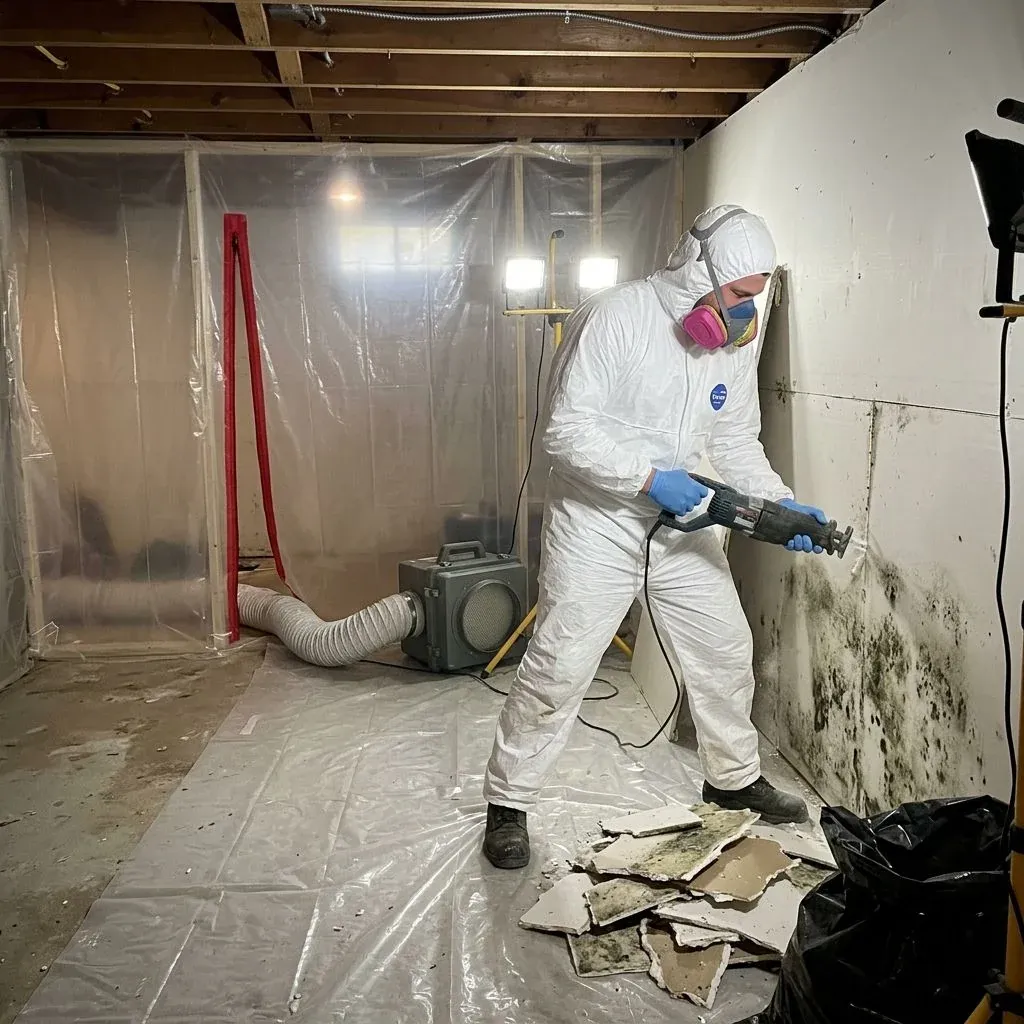
EPA's cleanup table by material decides much of the tear-out: insulation and ceiling tile that soaked through get replaced, and wallboard is kept only if it shows no swelling and its seams are sound. Drywall past saving comes off along a level line above the wet zone, the cut the trade calls a flood cut, so the cavity can air out.
More than half the county's housing went up before 1980, so a share of those cuts run through paint from before 1978, and that dust is kept contained the way EPA's renovation rule spells out. Mold found inside an opened wall moves that section into our remediation process before it is closed.
What Water Damage Services Do We Offer in Bucks County?
County water calls usually need one of these three services.
- Flood and sewage backup cleanup
- Structural drying with logged dehumidification
- Water-damaged contents, floors and walls
Neshaminy Creek near Langhorne reached 22.84 feet on August 19, 1955, the highest crest on the National Weather Service's table for that gauge. The county also keeps a Mitigation and Recovery page with grant and planning resources for owners in flood-prone areas.
How to Handle Water Damage in a Bucks County Building
Call, shut off, stay safe.
Ring the 24/7 number, turn off the supply if doing so keeps you on dry footing, and expect our first visit to cover only stopping the water and securing the rooms, with any later work held until you approve a written estimate and sign an authorization.
Pump, dry and record.
Extraction comes first, then air movers and dehumidifiers matched to the class of loss, with moisture readings written into the log on each visit.
Dry on paper, then rebuild on contract.
Once the numbers show dry, the full log and photo set are yours, and replacing the drywall, floors or trim we took out gets a separate price and a separate agreement.
Who Needs Water Damage Restoration in Bucks County, PA?
Water damage restoration in Bucks County, PA is needed by any owner or manager whose building took on water that a mop and a fan cannot clear within 24 to 48 hours. That covers a single failed water heater as surely as a storm that pushes a creek into a ground floor.
Waiting costs more than calling, and EPA's flooded homes guidance warns that wet items left for more than two days usually grow mold. A musty smell means that deadline has already passed.
Sewage and creek water are Category 3, so carpet, pad, drywall and insulation they soaked leave the building instead of getting dried. That gets said on the first visit, so nobody pays for fans aimed at a wall that is coming out.
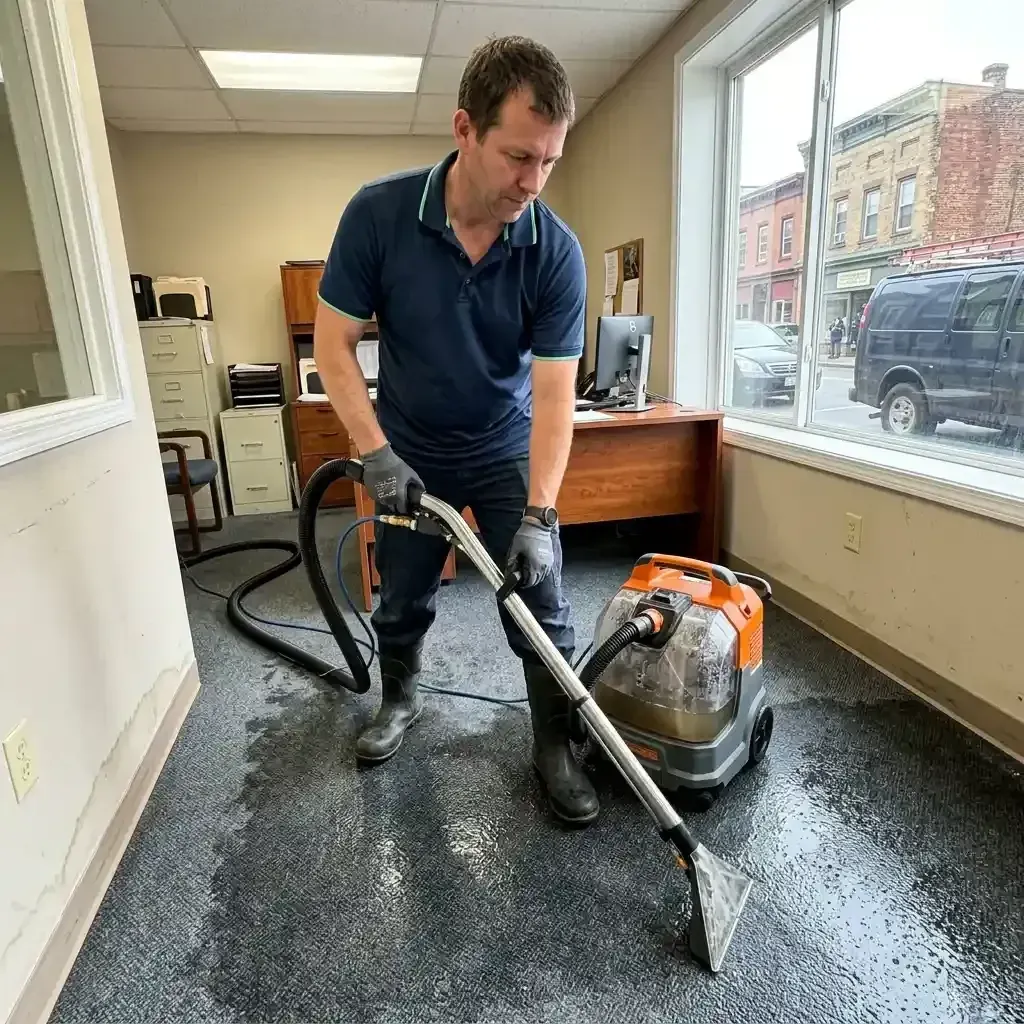
Where Water Hides in Bucks County, and When to Phone
Rather talk it through?
(844) 620-7505, answered 24/7
Which parts of a Bucks County building hold water longest?
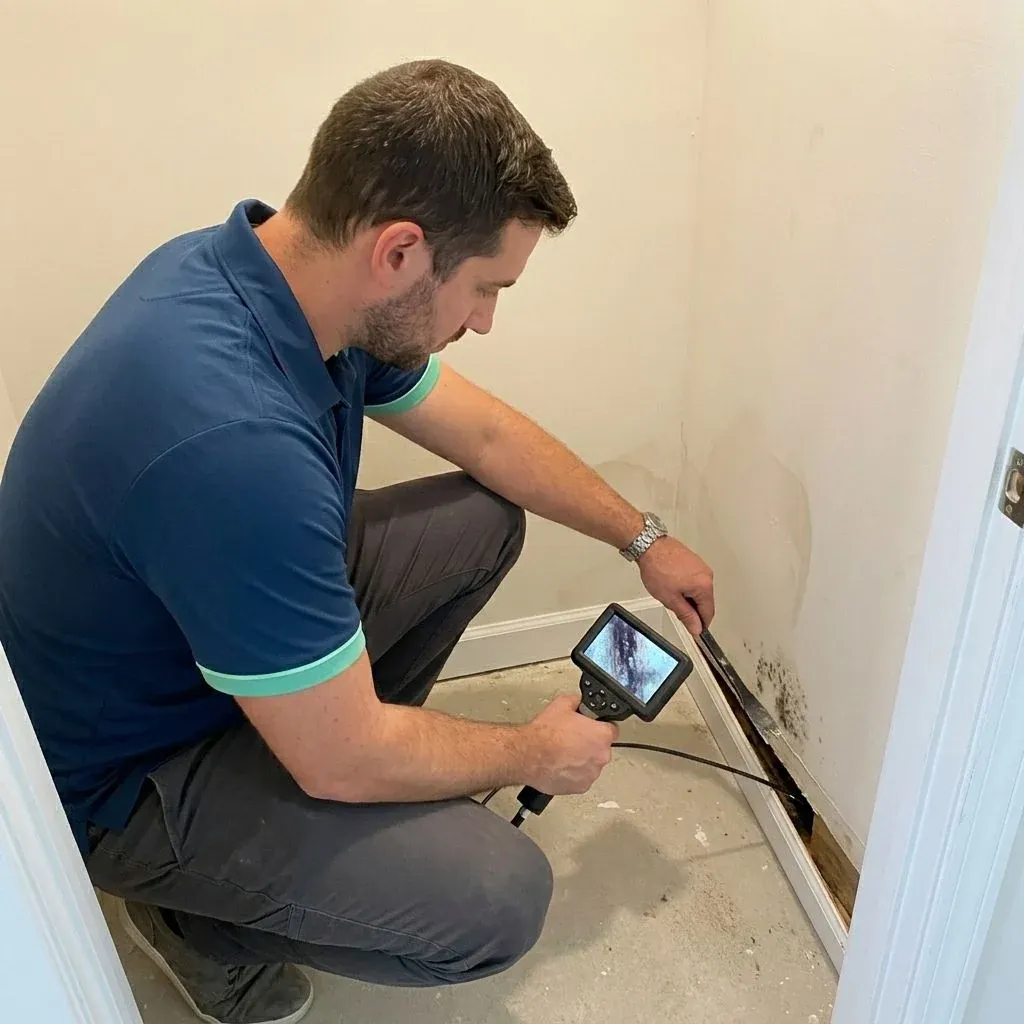
The parts of a Bucks County building that hold water longest sit out of sight, under flooring and carpet pad, in the bottom of wall cavities and inside the subfloor, and on a lower level it can wick up drywall well above the visible line. We meter past the edge of the wet spot until the readings come back normal.
When should you call about water damage in Bucks County?
The time to call about water damage in Bucks County is the hour the leak is shut off or the flood goes down, whether that falls at noon or at three in the morning. During a declared storm, follow the county Emergency Management Agency's instructions first, then call, and we aim to put a crew on site anywhere in the county within two hours.
Who manages water damage in a Bucks County business?
In a Bucks County business, the owner or property manager manages water damage with us, and we stage the equipment so customers and staff can keep using the dry rooms. Everyone in the building hears which areas are closed off and for what reason.
How Much Does Water Damage Cleanup Cost in Bucks County?
Water damage cleanup in Bucks County runs from a clean-water rate of $3 to $4 per square foot up to a range of $450 to $16,000 when sewage backs up, in published market figures, and opening a wall to find mold behind it can add $1,200 to $3,800. Fixr and other national guides publish those averages, which are not our prices, and your estimate comes from a walk through the wet rooms.
| Loss | What it usually means | Market range |
|---|---|---|
| Sewage backup cleanup | a drain or sewer line backing up into a lower level, with everything it soaked removed | $450 to $16,000 |
| Clean water (Category 1) | a burst supply line or an overflowing tub, dried in place where possible | $3 to $4 per square foot |
| Mold found once walls are open | growth discovered behind wet drywall during the cut | $1,200 to $3,800 |
Averages across many losses rather than a C&J price, with rebuilding priced only after the log shows dry.
- What makes sewage cleanup the costliest kind of water job?
Sewage cleanup is the costliest kind of water job because the crew suits up, seals the area and strips out every soft material the backup reached before a single dehumidifier starts. A clean-water pipe break dried in place lists at $1,500 to $7,000 in cost guides, while a sewage job's range reaches far higher.
- Why do plaster and hardwood take longer to dry?
Plaster, hardwood and concrete take longer to dry because they hold water deep inside and give it up slowly, which is why the IICRC treats them as specialty drying. Each extra day adds equipment time, and the daily log shows you why the machines are still running.
- Do our photos and logs matter to a Bucks County insurer?
Our photos and logs matter to a Bucks County insurer because they show, dated and itemized, what was wet and what was done about it. Payment under the policy is the insurer's call, and filing and following the claim stays with you.
Is Water Still Entering Your Bucks County Building?
Water still pouring in calls for the 24/7 number right now, after you close the supply valve from a dry spot if one exists. A leak that has already quit can wait for the online form, which books a free estimate visit.