
Water Damage Restoration in Quakertown, PA
Water damage restoration in Quakertown, PA is answered 24/7 in a borough crossed by Licking Run, which flows west to east through town and empties into Tohickon Creek. Ring the line at any hour, and the crew's first task is to cut off the water and make the building safe.
- (844) 620-7505answered 24/7
- Warminster, PA
- Restoration · homes and businesses
- Clients served
- 1,100+
- Google rating, 26 reviews
- 5.0
- Emergency response
- 24/7
- 14 years in business, since 2012
- IICRC Certified Firm
- EPA Lead-Safe Certified Firm
This page covers water damage restoration for homes and businesses in Quakertown Borough, the largest settlement along Tohickon Creek in upper Bucks County, Pennsylvania.
C&J Environmental keeps a 24/7 emergency line, removes standing water, grades it by IICRC category and runs the drying until daily readings reach dry. Wet materials that cannot be saved are cut out, and an EPA Lead-Safe Certified Firm deals with any paint from before 1978.
The figure to keep: national cost guides put most home water jobs at $1,300 to $6,400 and the drying of a 500-square-foot basement at $2,000 to $7,000, averages rather than a quote.
Why Does a Quakertown Leak Need Drying Right Away?
A Quakertown leak needs drying right away because EPA warns that damp materials not dried within two days tend to turn moldy, and that clock runs through nights and weekends. Quakertown is the largest settlement along all 29.5 miles of Tohickon Creek, and Licking Run carries its share of every storm straight through the borough.
- Bucks County's FEMA flood declarations include Floyd in 1999, Irene and Lee in 2011, and Ida in 2021
- Allentown's NOAA station records a 21.8 degree January low, cold enough to split an exposed pipe
- Drying tracked with daily readings until materials read dry
- Line answered 24/7
- Readings logged each day
- Rebuild priced separately
What Do Our Customers Say?
5.0 on Google from 26 reviews
Stellar customer service and quick turn around time
Angela T.Google review
Anthony & his team were extremely professional, quick to communicate/get on site, and provided excellent service at a fair price. Highly recommend C&J and will use them in the future if needed!
Tim T.Google review
On time and within budget
Tom T.Google review
Get your free estimate request sent in 60 seconds!
Water Damage Restoration in Quakertown? See Who Trusts C&J
















What Might a Quakertown Building Need After the Drying?
Which Towns Near Quakertown Can Use the Same Line?
What Are the Steps After a Quakertown Building Floods?
Our water damage restoration work in a Quakertown building moves in three steps: make the building safe and document it, dry it against readings, then decide what can stay.
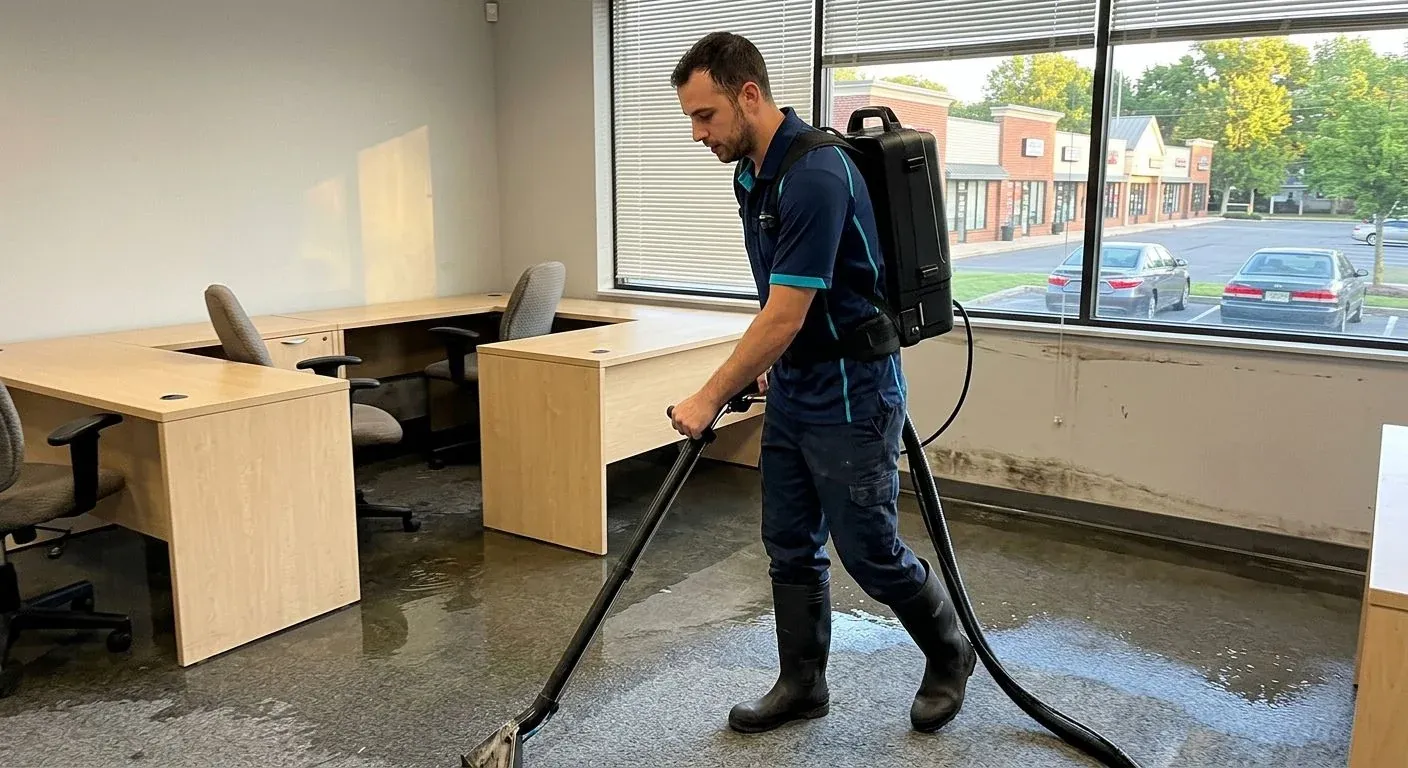
Making a Wet Quakertown Building Safe
Turn off the main valve if it can be reached without stepping in water, and keep the power off to any wet room until an electrician has checked it. Water that rose out of Licking Run or came up a floor drain may carry sewage, so keep people out of it while the pumps run.
We photograph every wet room before anything moves, following EPA's advice to document damage for your insurance company. Then pumps and extraction wands pull out the standing water, since drying cannot start while water stands on the floor.
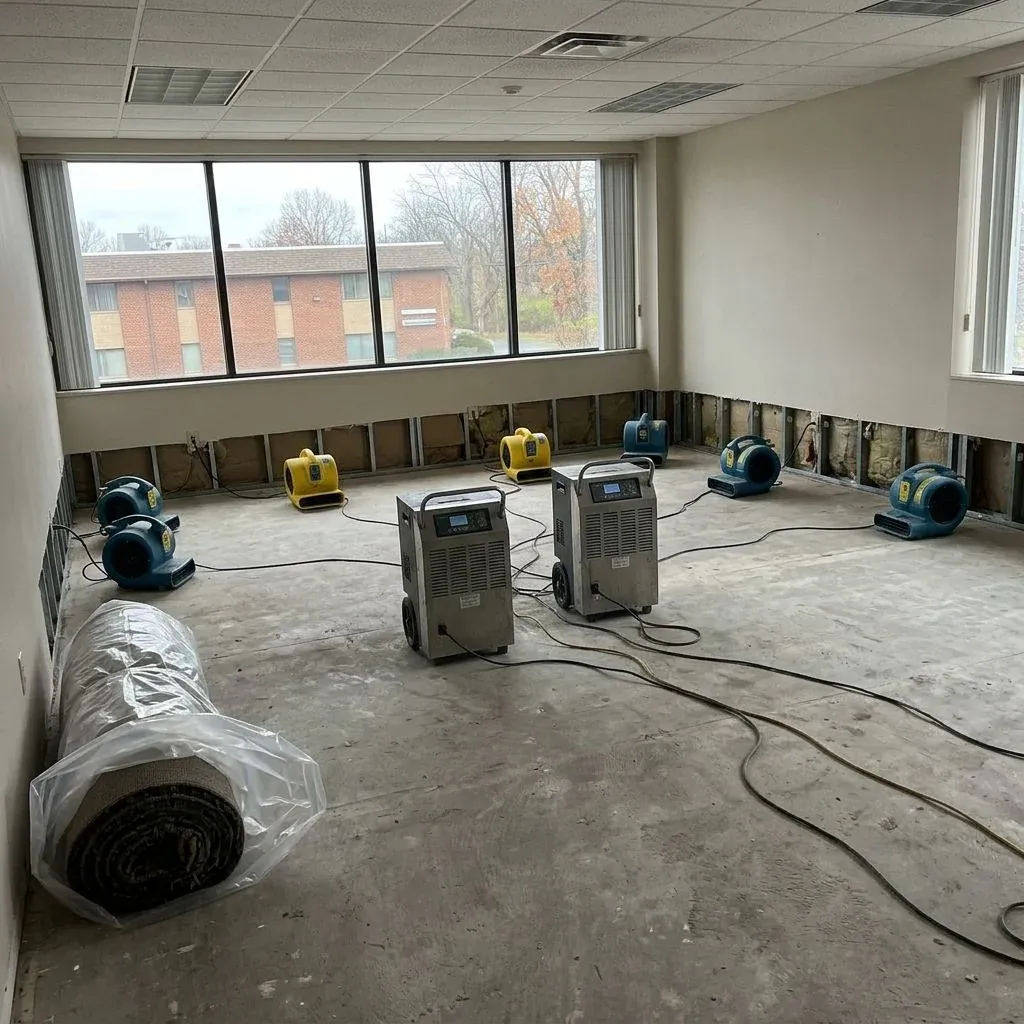
Category, Class and Daily Readings in Quakertown
The IICRC S500 standard, summarized in IICRC's flood resources, grades water by contamination: Category 1 begins clean, like a burst supply line, Category 2 can sicken people, like a dishwasher overflow, and Category 3, the grossly contaminated kind, covers sewage and streams rising into a building. Rain through a roof or window is graded on site, since the standard's consensus body says weather-related water is not automatically Category 3.
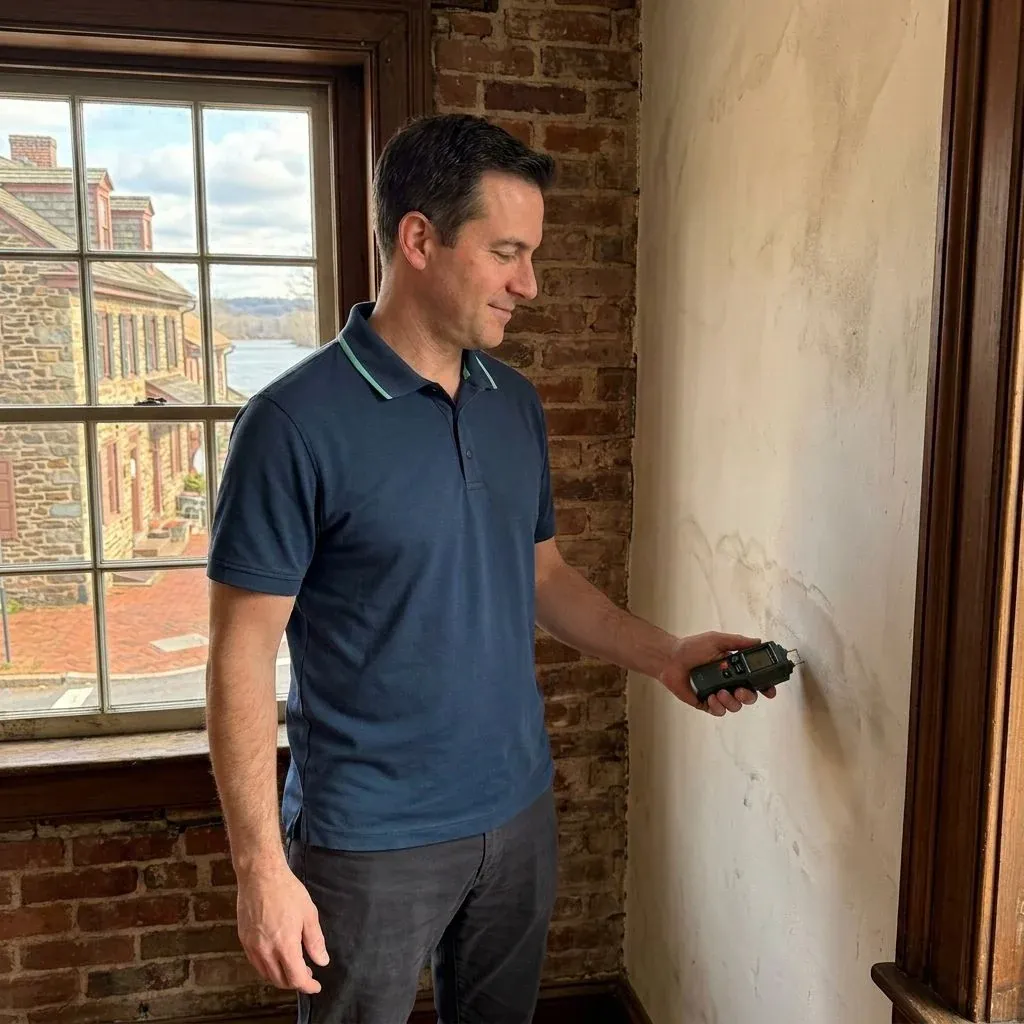
Class describes how much water the building soaked up, from part of one room to saturated plaster, brick or concrete that needs special drying. With more than a quarter of Quakertown's housing built in 1939 or earlier, plaster and masonry walls are common here, so we read the walls, framing and subfloor daily and keep the air movers and dehumidifiers running until those numbers reach dry.
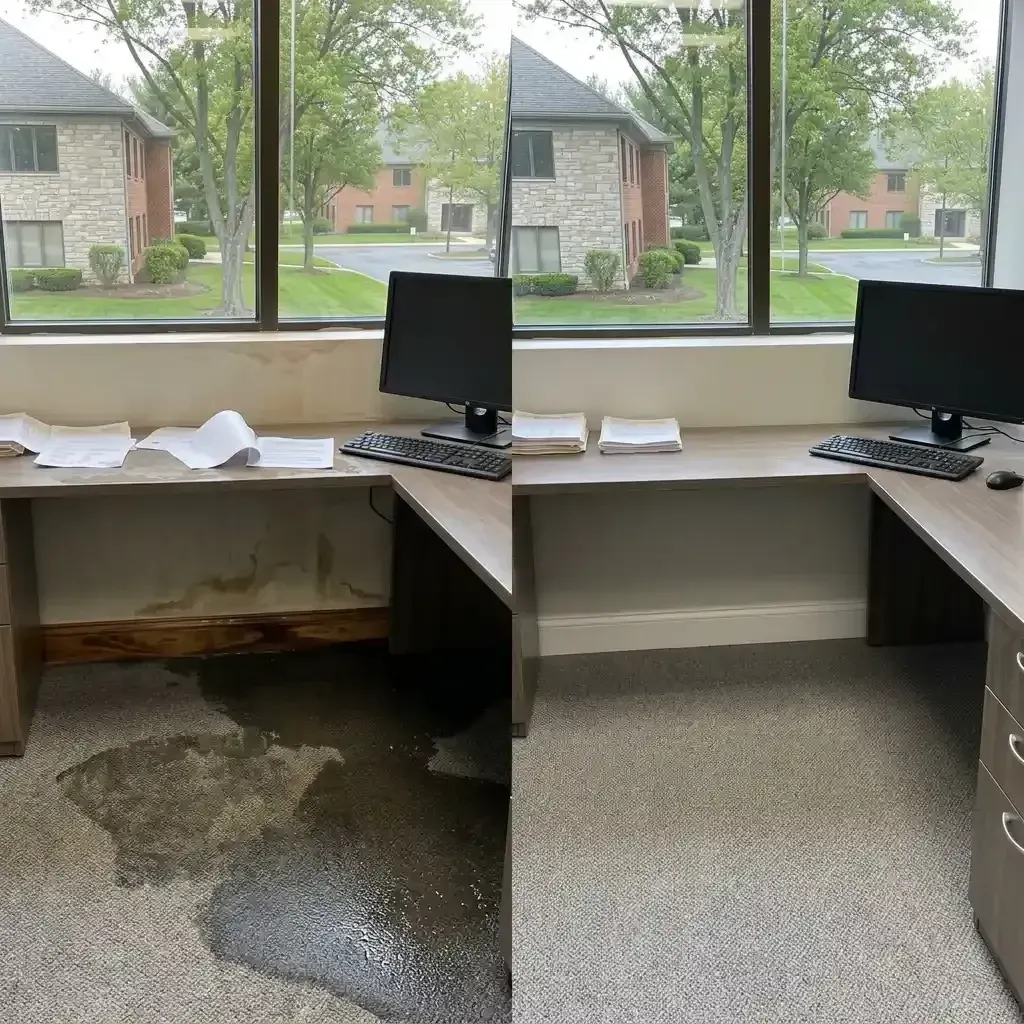
What Stays and What Goes in a Flooded Quakertown Room
EPA's table of water-damaged materials sorts the decisions: wet ceiling tiles and insulation are replaced, carpet soaked by clean water may be dried, and drywall stays only if it has not swollen and its seams hold. Where a wall must open, a flood cut removes the wet bottom in a straight line above the waterline so the cavity can dry.
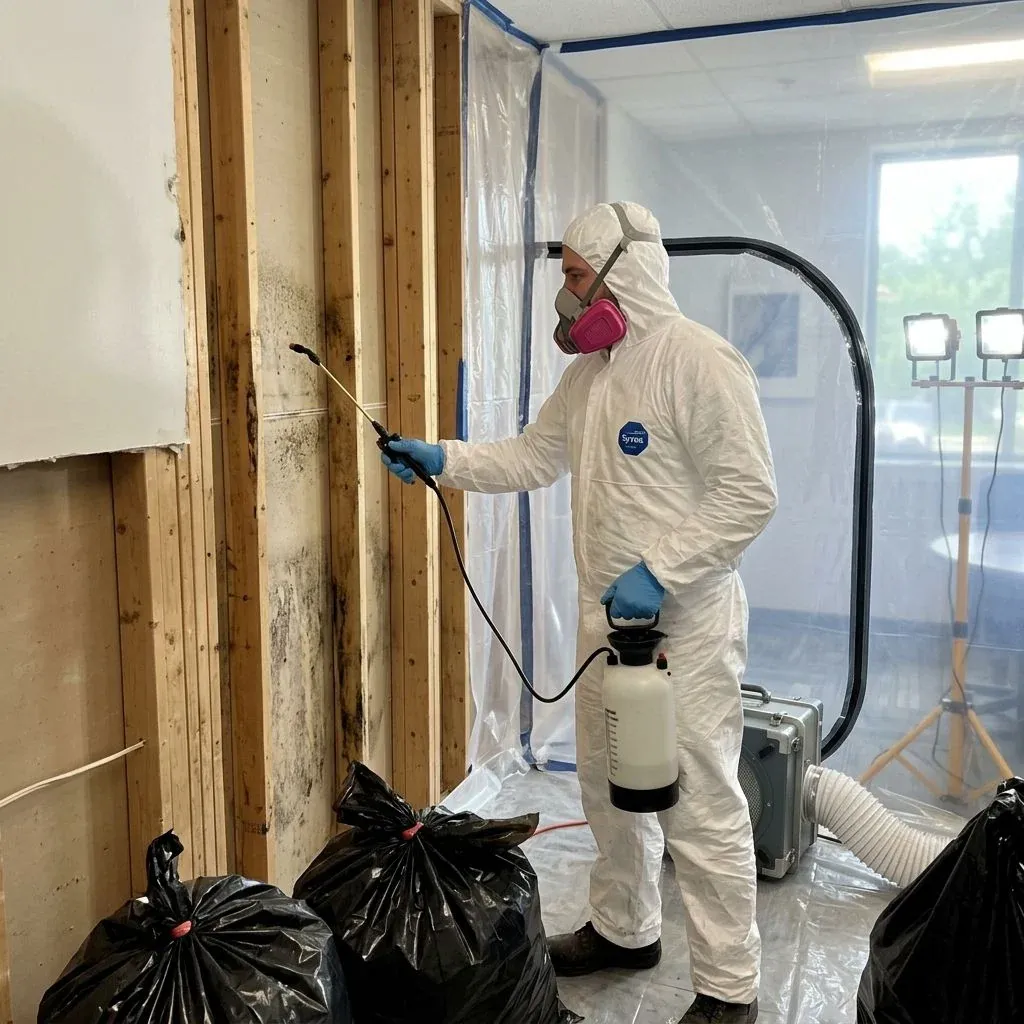
Older Quakertown walls can hide pre-1978 paint, and as an EPA Lead-Safe Certified Firm we open it using the dust containment EPA's lead rule calls for. Mold found in the opened cavity moves the job to our remediation process before the wall closes again.
What Water Damage Services Do We Offer in Quakertown?
Quakertown water jobs draw on three of our services.
- Emergency extraction of standing water
- Burst pipe and appliance leak drying
- Storm and roof leaks, category set on site
The Army Corps dammed Tohickon Creek just south of Quakertown in 1958 to form Lake Nockamixon, and Licking Run still drains the borough into that creek. When water from a stream or a backed-up drain enters a building, we treat it as Category 3 from the start.
How to Stop Water Damage From Spreading in Quakertown
Call the 24/7 line.
We stop the water where that is safe, and beyond making the building safe, no work begins before you have a written estimate in hand and a signed authorization on file.
Extraction and drying, logged daily.
Standing water is pumped out, drying equipment is set, and a daily log captures every moisture reading.
Dry first, rebuild second.
When the readings show dry, you receive the log and the photos, and any repairs are priced and signed for separately.
Who Needs Water Damage Restoration in Quakertown, PA?
Any Quakertown property owner with drywall, flooring, subfloor or insulation still wet two days after a leak needs water damage restoration in Quakertown, PA. That covers a split supply line under a kitchen as surely as a basement where a floor drain backed up.
Waiting for a smell is waiting too long, because by then the drying window has closed. EPA's flooded homes guidance notes that materials which stay wet beyond two days usually grow mold.
Sewage and stream water are Category 3, and porous materials they soak are removed, not dried. We tell you that on the first visit, so no money goes into drying drywall that has to be cut out.
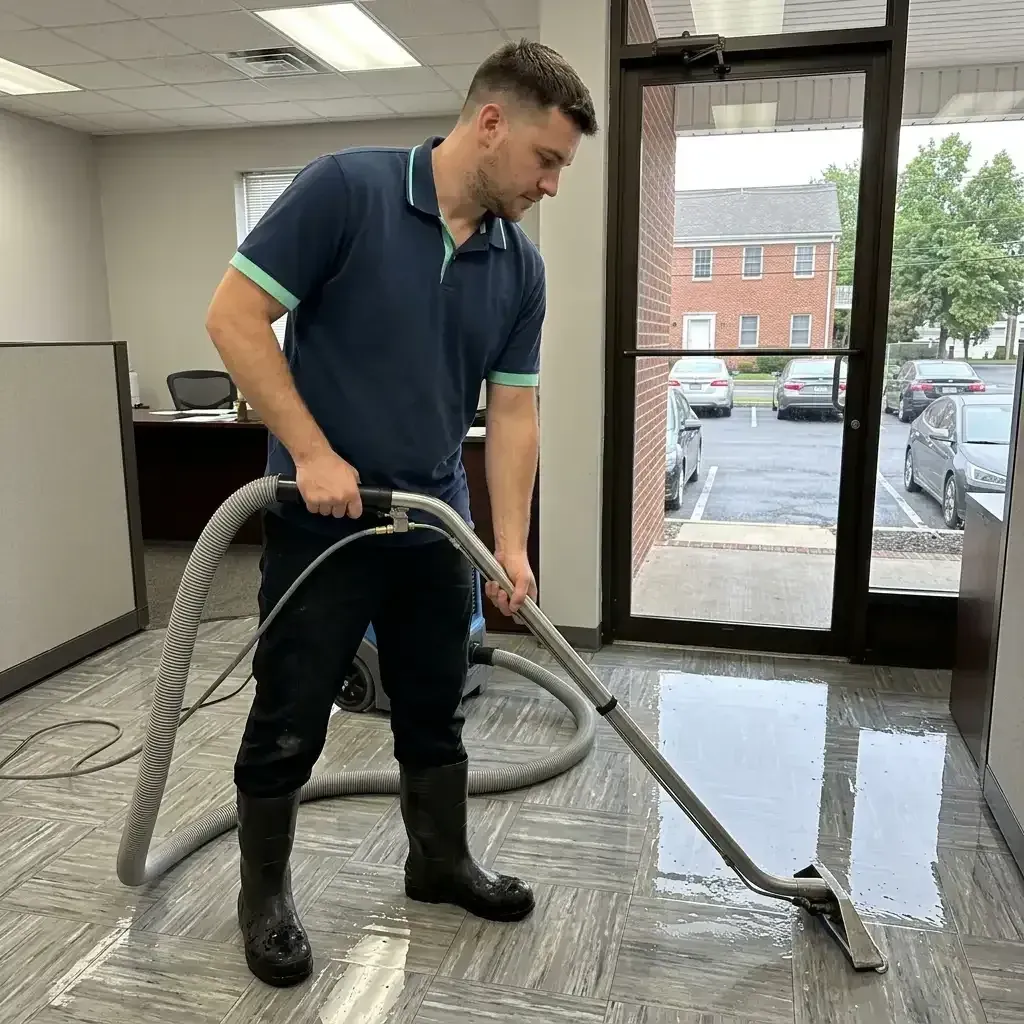
Where Does Water Travel in Quakertown, and When to Call?
Rather talk it through?
(844) 620-7505, answered 24/7
Where does water travel inside a Quakertown building?
Water travels inside a Quakertown building downward and sideways, through floor coverings, into the base of the drywall and through the subfloor to the level below. Older plaster ceilings can hold water above a stain for hours, so we check the floor above and the room below as well.
When should a Quakertown owner call?
A Quakertown owner should call the moment the water is off, day or night, and our aim is to have a crew there within two hours, because EPA's drying window starts when the water arrives. A January freeze, with lows near 21.8 degrees at Allentown's station, is when an exposed pipe can split.
How do we work around a Quakertown business?
We work around a Quakertown business by drying in sections where we can, so open rooms keep serving customers while the wet ones stay closed. The daily drying log shows the owner or manager which rooms are still under equipment and why.
How Much Does Water Damage Cost to Dry in Quakertown?
Water damage in Quakertown costs $1,300 to $6,400 to restore for the average home job, per published market ranges, while drying a 500-square-foot basement runs $2,000 to $7,000 without repairs and mold uncovered in opened walls adds $1,200 to $3,800. Fixr's water damage guide and other national sources publish those averages, which are not C&J's rates, so your written estimate still follows a look at the wet area.
| Loss | What it usually means | Market range |
|---|---|---|
| Most home water jobs | a single leak or overflow, pumped and dried in a room or two | $1,300 to $6,400 |
| Drying a 500-square-foot basement, repairs excluded | equipment and monitoring until the lower level reads dry | $2,000 to $7,000 |
| Mold found once walls are open | remediation added when a dried cavity shows growth | $1,200 to $3,800 |
National guide averages built from many water losses, not C&J's rates, and repairs get their own estimate once the readings say dry.
- How does the water's category change a Quakertown bill?
The water's category changes a Quakertown bill because Category 2 and 3 losses bring protective gear, contamination controls and more removal before drying starts. Published guides price Category 3 work at $7 to $7.50 per square foot before any rebuilding, well above clean-water drying.
- Why does a basement take longer to dry?
A basement can take longer to dry because concrete and masonry give up water slowly and the air below grade stays damp. The equipment runs until the daily readings reach dry, and the daily log explains every extra day on the bill.
- What paperwork do we give you for the insurer?
The paperwork we give you for the insurer is a photo record of every wet room before cleanup, the daily moisture readings and an itemized estimate. What the policy pays for is the insurer's call, and the claim runs between you and them.
Who Do You Call When Water Hits a Quakertown Building?
When water hits a Quakertown building, call our 24/7 line first and, if you can do it without wading, shut the main valve. If the leak has already stopped, send the form instead, and we will come out to price the drying at no charge.