
Water Damage Restoration in Montgomery County, PA
Water damage restoration in Montgomery County, PA is round-the-clock work in a county where Ida pushed the Perkiomen Creek at Graterford to an estimated 64,400 cubic feet per second on September 2, 2021, the highest peak in that gauge's USGS record. The line is answered around the clock, and every call begins by shutting off the water and securing the space.
- (844) 620-7505answered 24/7
- Warminster, PA
- Restoration · homes and businesses
- Clients served
- 1,100+
- Google rating, 26 reviews
- 5.0
- Emergency response
- 24/7
- 14 years in business, since 2012
- IICRC Certified Firm
- EPA Lead-Safe Certified Firm
Water losses across Montgomery County, from burst pipes to the kind of creek flooding the Perkiomen brought during Ida in 2021, are the focus of this page for houses, apartment buildings and businesses.
C&J Environmental answers 24/7, extracts standing water, sets the water category on site under IICRC S500, dries with air movers and dehumidifiers while logging readings daily, and removes only what cannot dry. It is an IICRC Certified Firm and an EPA Lead-Safe Certified Firm.
A number to know: cost guides put most home water jobs at $1,300 to $6,400, a market average rather than a quote for any one building.
Why Is Montgomery County Water Damage a 24/7 Problem?
Montgomery County water damage is a 24/7 problem because water keeps soaking into drywall, framing and flooring whether or not anyone answers a phone, and EPA's 24 to 48 hour drying window does not wait for morning. During Ida the county logged 6,583 911 calls in 24 hours, about triple the usual volume, a measure of how many buildings one storm can reach at once.
- The Perkiomen at Graterford hit an estimated 64,400 cubic feet per second during Ida
- OpenFEMA lists 21 major disaster declarations for the county from 1965 on
- 106.9 days a year at or below freezing at Norristown's NOAA station
- Line open every hour
- Category set on site
- Readings logged each day
What Do Our Customers Say?
5.0 on Google from 26 reviews
Stellar customer service and quick turn around time
Angela T.Google review
Excellent customer service, easy to work with, very happy with results!
Heidi B.Google review
No one better than Anthony and his team!
B.G. L.Google review
Get your free estimate request sent in 60 seconds!
Water Damage Help in Montgomery County? See Who Trusts C&J
















What Follows Once County Floodwater Is Out?
Which Nearby Towns Can Reach Our Water Crew?
What Does Restoration Look Like After a County Flood?
Our water damage restoration work in Montgomery County breaks into three stages, whether the water came from a split pipe or the Perkiomen over its banks: safety and extraction, measured drying, and decisions about what stays.
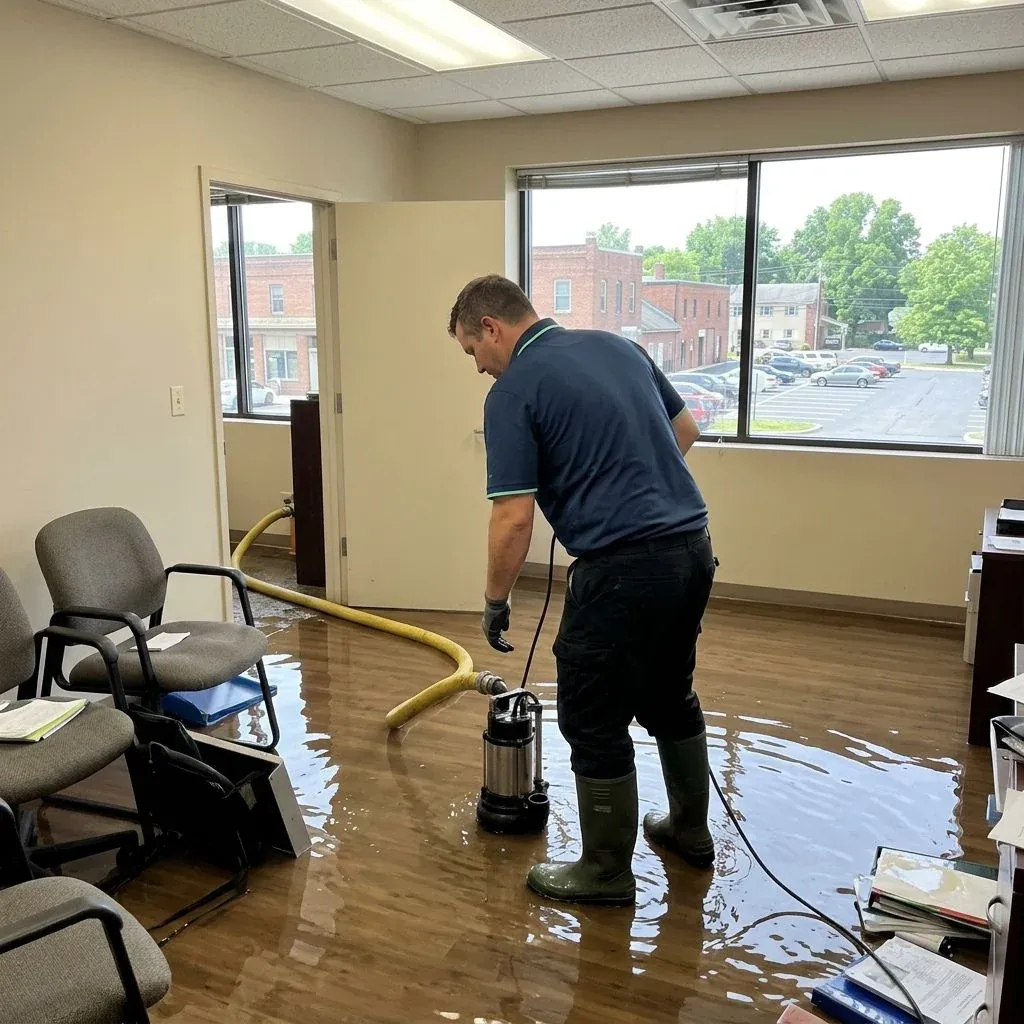
The First Hour After a Montgomery County Flood
Turn off the water at the main valve when you can get to it without stepping in water, and leave electricity off wherever water meets outlets or cords. Floodwater can carry sewage and chemicals, CDC warns, so the safest plan is to stay out and let equipment do the pumping.
Photos of every wet room come first, since EPA's flood guidance tells owners to document damage before cleanup begins. In the Perkiomen valley, where the National Weather Service says flooding reaches Collegeville at a 12-foot stage on the Graterford gauge, creek water counts as Category 3 from the start, so extraction begins in full protective gear.
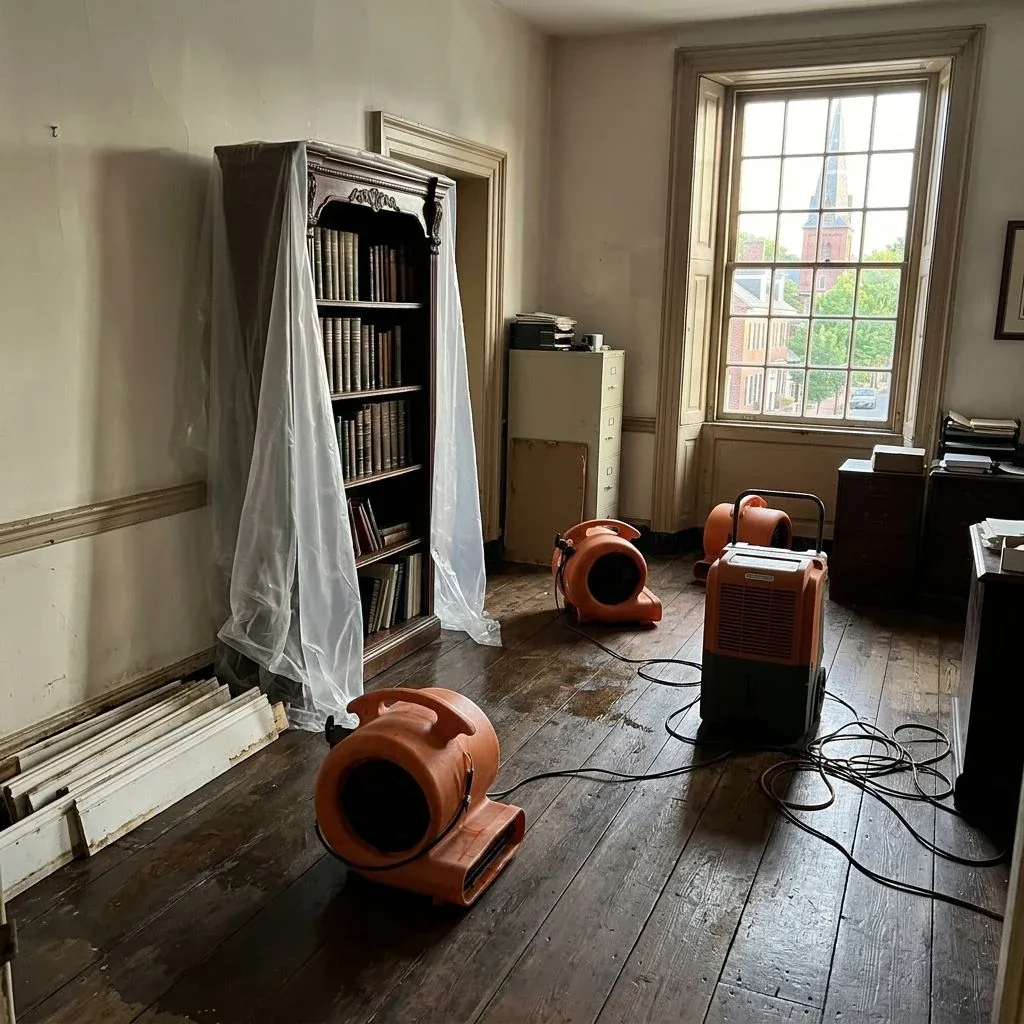
Measured Drying for County Buildings
Drying follows the IICRC S500 standard, which classes water by contamination: Category 1 starts from a sanitary source, Category 2 holds enough contamination to sicken people, and Category 3 is grossly contaminated, sewage and rising river or stream water included. Wind-driven rain is not automatically Category 3, as the S500 Consensus Body stated in 2026, so we set the category on site.
Then the drying equipment runs while each day's drywall, framing and subfloor readings go into a drying log, the dated record of how the building dried. After one of the county's declared floods, that log is also the paper trail an owner keeps for the insurer.
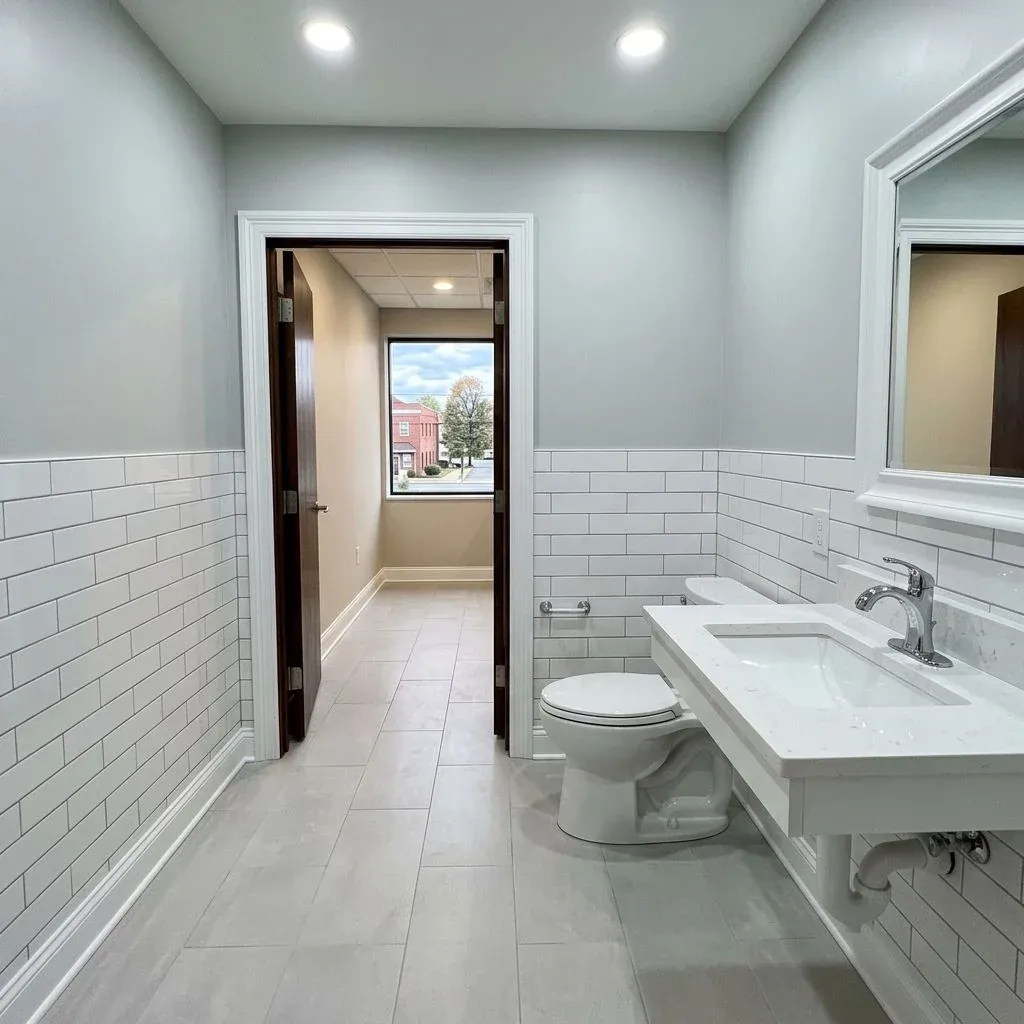
What Gets Removed From a Flooded County Building
EPA's table of water-damage actions by material sorts the decisions: soaked ceiling tile and insulation get replaced, masonry gets dried where it stands, and wallboard stays only without swelling or broken seams. Where floodwater soaked the drywall, a flood cut, a straight line cut above the high-water mark, lets the wet bottom come out and the cavity dry.
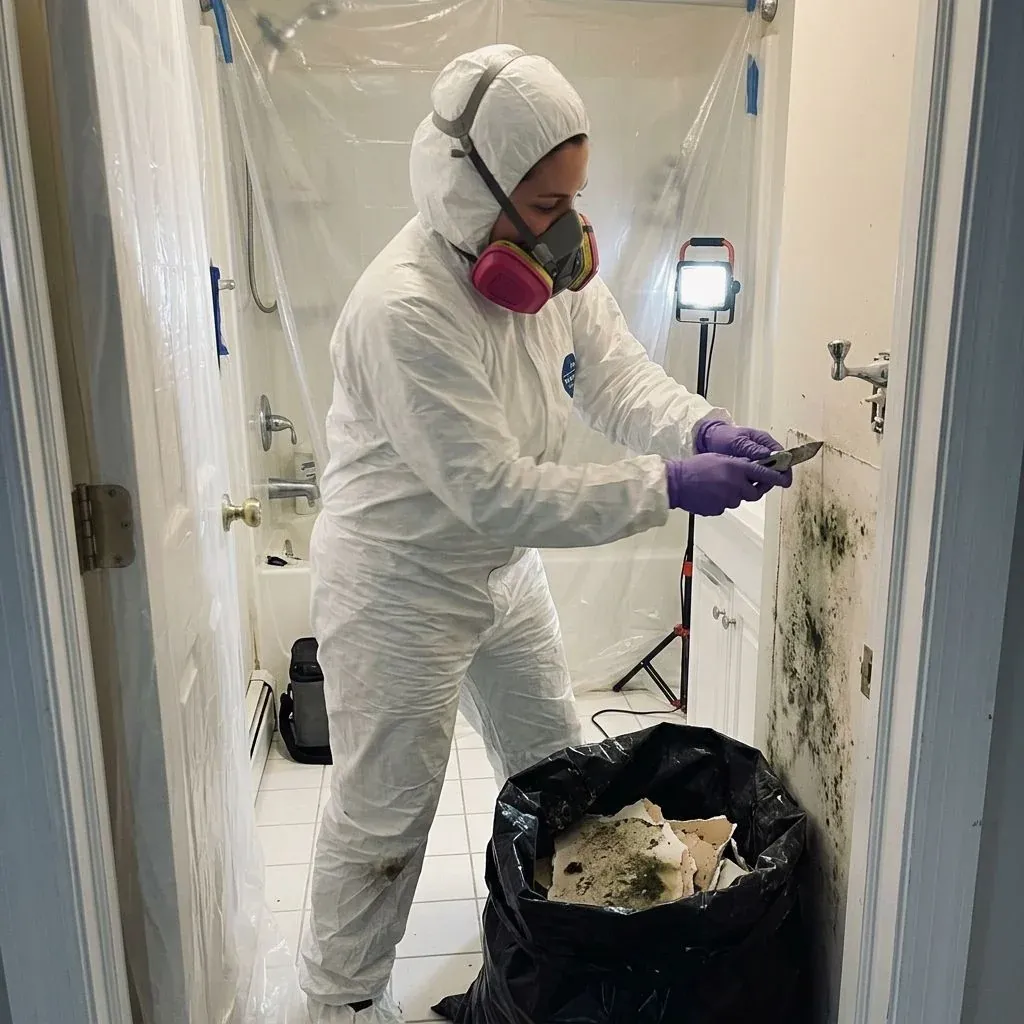
With 61.1 percent of county housing built before 1980, many flood cuts reach paint applied before 1978, and C&J keeps that dust contained the way EPA's rule requires, as an EPA Lead-Safe Certified Firm. Mold found inside an opened wall sends the job to mold remediation in Montgomery County before new board goes up.
What Water Damage Services Do We Offer in Montgomery County?
County water calls fall into three services, each written as its own line of the estimate.
- Flood and sewage cleanup as Category 3
- Storm and roof-leak water damage
- Structural drying and dehumidification
The county's 2022 Hazard Mitigation Plan, approved by FEMA in early 2023, carries flooding forward as one of the 28 hazards it covers. Water losses here are not rare events, which is why our line answers around the clock.
How to Get a Flooded County Building Dry Again
One call, any hour.
The 24/7 line is answered, the water is stopped where that is safe, and the first visit stays limited to making the space safe. Further work starts only after you approve a written estimate and sign the authorization for it.
Water out, then a logged dry-down.
Extraction clears what is standing, and air movers and dehumidifiers run with readings taken and recorded each day.
A dry log, then a rebuild scope.
You receive the drying log and photos once every material reads dry, and replacement work is priced on its own contract.
Who Needs Water Damage Restoration in Montgomery County, PA?
Water damage restoration in Montgomery County, PA is needed by anyone whose walls, floors or framing will not be dry inside 24 to 48 hours, whether the water came from a supply line or the Perkiomen. Household fans reach the surfaces, never the water hidden in a wall cavity or beneath the flooring.
A musty smell is a late warning, not an early one. EPA's advice for flooded buildings counts two days of dampness as enough for mold to start.
Anything porous that Category 3 water reached, from carpet and pad to the bottom of the drywall, is removed rather than dried. Telling you that on day one costs you less than drying a wall twice.
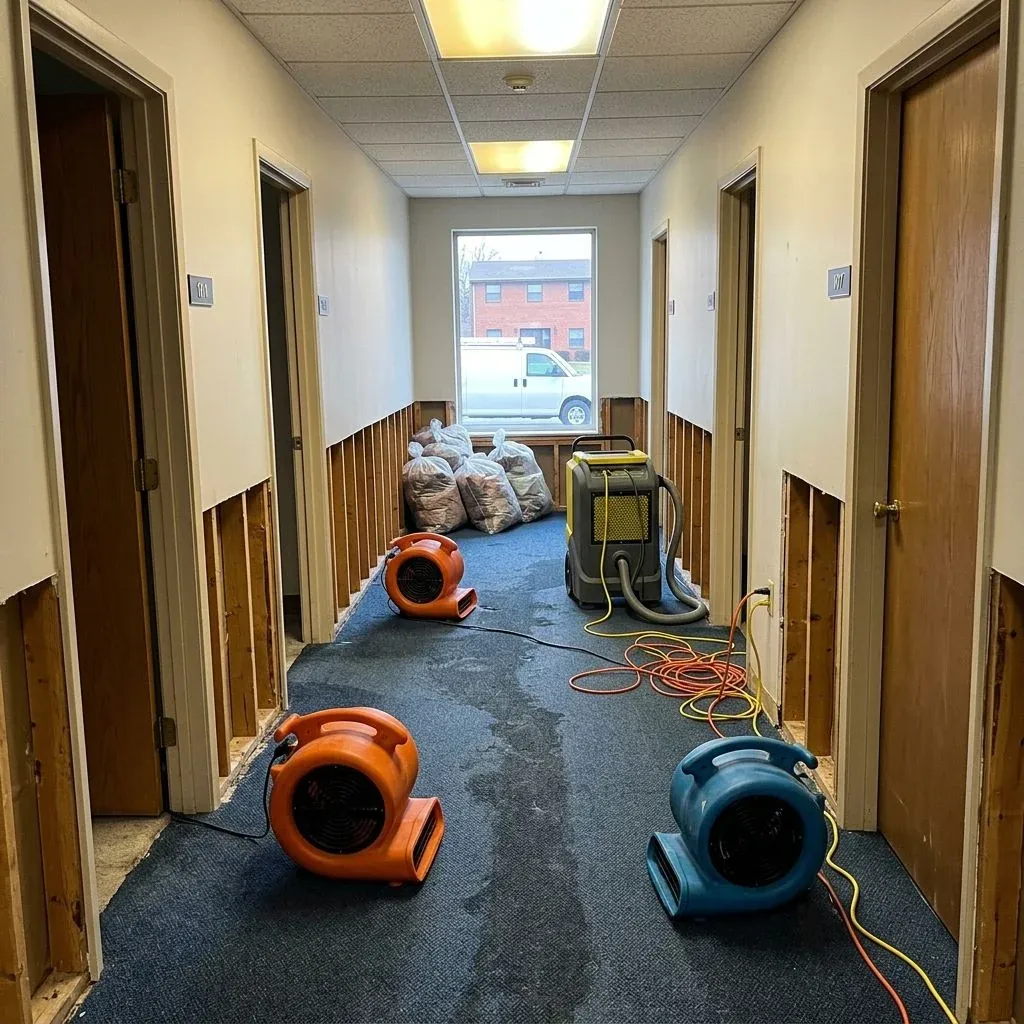
Where Does County Floodwater Linger, and When Do You Call?
Rather talk it through?
(844) 620-7505, answered 24/7
Which spots in a flooded county building stay wet longest?
The spots that stay wet longest in a flooded county building are wall cavities, floating floors and carpet pad, subfloors and the lowest courses of block foundations. We map it with meters room by room, because a wall can look dry while its base still reads wet.
When should a county owner call about water?
A county owner should call the moment the water source is stopped, whatever the hour, and any Montgomery County address is one we aim to reach within 2 hours of that emergency call. If a creek is still rising, follow local emergency officials' instructions before going back in, then call.
Who handles a water loss in a county business?
A county business names one person, usually the owner or the property manager, to handle the water loss with us, and we set the drying schedule so open areas can keep operating where the equipment allows. We post which rooms are closed and give tenants a contact for questions while the machines run.
How Much Should a County Water Loss Cost to Restore?
A county water loss should cost $1,300 to $6,400 to restore for a typical home, going by published market ranges, with Category 1 drying at $3 to $4 per square foot against $7 to $7.50 for sewage or floodwater. Those averages come from Fixr and other national guides, describe many losses rather than C&J's pricing, and give way to your own estimate once we have seen the wet materials.
| Loss | What it usually means | Market range |
|---|---|---|
| Most home water jobs | a room or two, from pumping out to dry | $1,300 to $6,400 |
| Clean water (Category 1) | a broken supply line or an appliance hose | $3 to $4 per square foot |
| Sewage or floodwater (Category 3) | backups and creek or river water, porous items removed | $7 to $7.50 per square foot |
Published averages spanning many losses and not a C&J price, with rebuilding scoped after the last dry reading.
- What does a full flood cleanup cost in the county?
A full flood cleanup in the county, with every wet drywall panel, insulation batt and carpet removed after Category 3 water, runs $8,000 to $50,000 in cost guides. Where a building lands in that range depends on how high the water rose and how many rooms it reached.
- Why do drying days add to the bill?
Drying days add to the bill because each machine is billed for every day it stays, and it stays until the materials test dry. The log lets you see, day by day, which readings are still keeping equipment on site.
- Can our records help with a county insurance claim?
Our records can help with a county insurance claim since they capture each room before cleanup, the daily readings and an itemized estimate. The insurer decides coverage, and you work with the insurer directly on the claim.
Has Water Reached Your Montgomery County Property?
Phone the 24/7 line now, then shut the main valve if it is within reach without standing in water. If the leak has already stopped, use the form instead, and the estimate visit is free.