
Genuine Flood Restoration in New Hope, PA | C&J Environmental
Serving New Hope, Pennsylvania with 31+ years of flood restoration, our team understands the compound flood risk that defines this Delaware River borough: 28% of properties facing severe 30-year flood risk, a documented history of Delaware River events in 2004, 2006, and 2021, Delaware Canal State Park overflow, and a year-round high water table driven by the canal system itself.
New Hope trusts C&J Environmental because flooding here is not a rare weather event. It is a documented feature of living near the Delaware River and the canal.
New Hope's flood profile is layered. The Delaware River flooded the borough in 2004, 2006, and 2021. The Delaware Canal keeps the water table persistently elevated. And 28% of properties carry severe flood risk over a 30-year horizon. We have managed flood restoration in communities like this one for 31+ years.
Our commitment to you, always:
- We respond the same day you call.
- We document everything for your insurance claim.
- We guarantee satisfaction, or we make it right.
Client Testimonials
Hear from your New Hope neighbors
I have used C & J for several Citrashield projects in the Bucks County area. Always fair, on time and complete the tasks given. Citrashield is proud to have C & J as an approved applicator.
Joe M.
Anthony was amazing from the start! He was incredibly personable, informative and professional. The pricing was fair with no hidden fees. The guys who came out to perform the work were professional and courteous. All in all C&J was so great to work with. Hopefully I never need mold removed again but if I do I would 100% call them!!
UBCTS in Perkasie
I used C and J recently to perform mold remediation at a home that I was selling near Independence Road. They were very professional, can on time and completed the work on budget. They did nice work and responded quickly so that the sale of the home could go through. Excellent service.
Mark J.
Where we offer Flood damage restoration services
Don't see your town listed below? Call us anyway and we'll still come to you!
OUR SERVICES
Flood Restoration Services We Offer
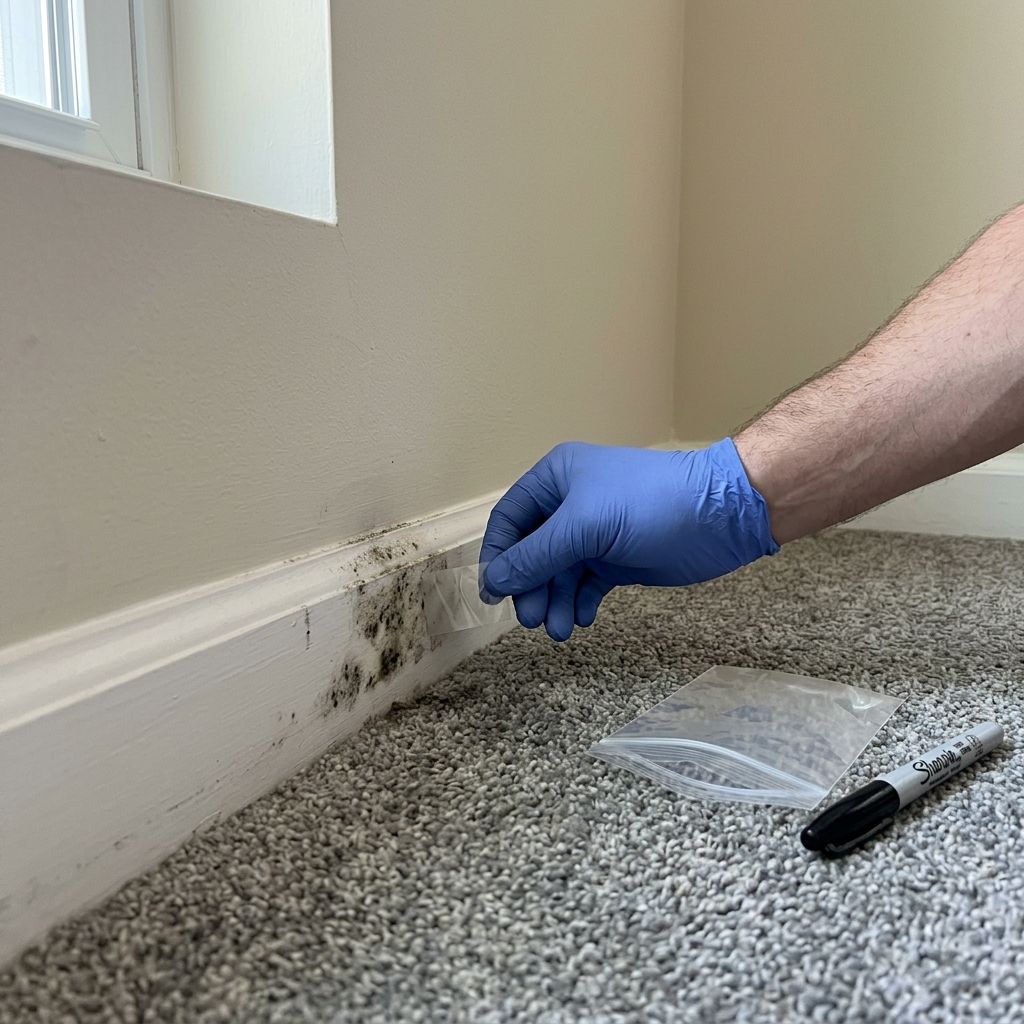
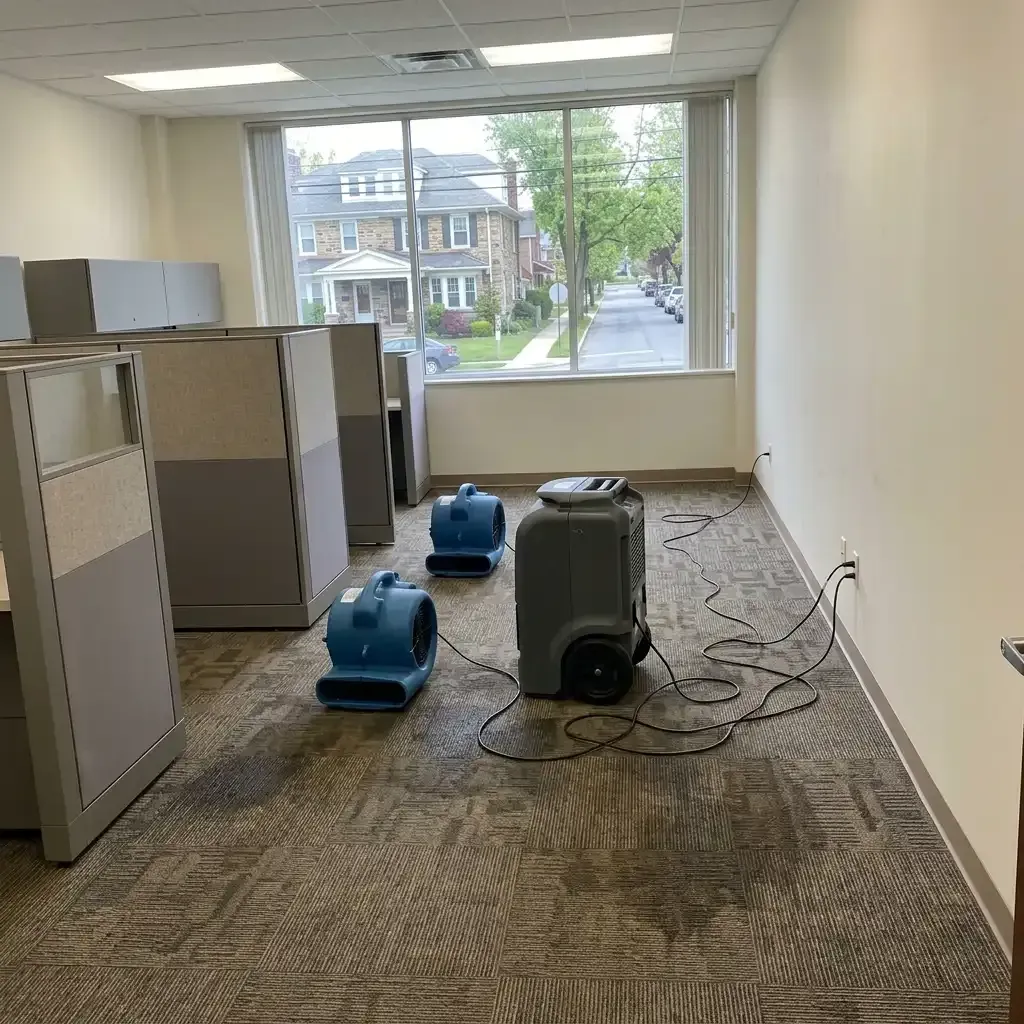
New Hope Sits on a Persistently Wet Table. The canal keeps the risk elevated year-round.
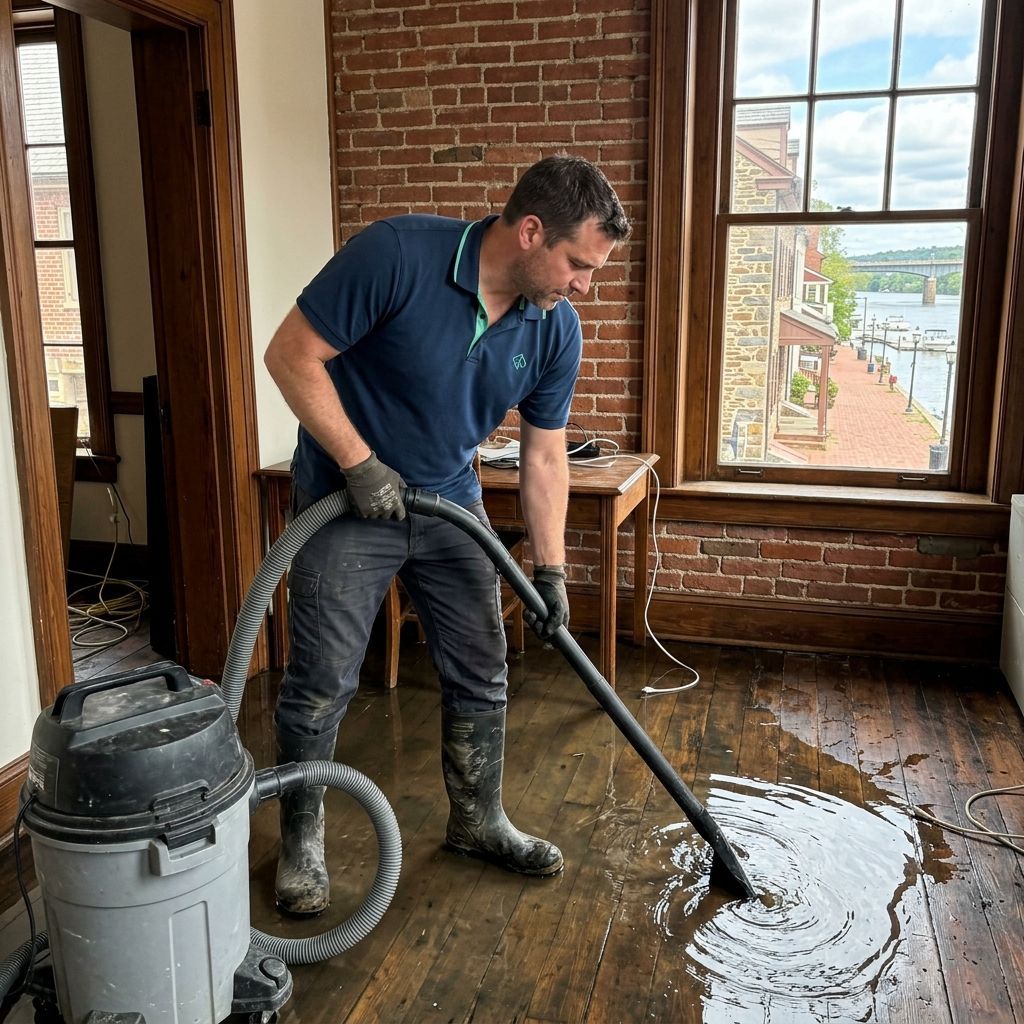
New Hope has experienced significant Delaware River flooding in 2004, 2006, and 2021. The Delaware Canal runs through town and keeps the water table persistently elevated year-round. On Bridge Street, along Mechanic Street, and throughout the riverfront neighborhoods, the flood risk never fully resets between storms. For 28% of properties, that risk is classified as severe over a 30-year horizon.
New Hope's challenge is the dual threat. During a major river event, water enters from the front as the Delaware crests into the borough. But even without a dramatic river event, the canal-driven water table keeps groundwater pressure against older foundations year-round. A basement that stayed dry all winter can still flood during a wet spring without any single storm being to blame.
New Hope Sits on a Persistently Wet Table
- Major Delaware River events have put entire blocks of the borough underwater in three separate years.
- Year-round canal-driven water table pressure never fully releases between storm events.
- Historic properties along the riverfront have original foundations not designed to resist sustained water pressure.
- Groundwater seeping through a block wall leaves no single dramatic moment to warn a homeowner.
- Flooding in a historic home carries particular weight for owners who have invested years in preservation and care.
Call us at 1-844-620-7505. We respond to New Hope flood calls the same day.
Your Recovery Starts Here
Every flood restoration job in New Hope begins with a dual-source assessment that identifies both surface water entry and groundwater pressure. In a borough where the Delaware Canal keeps the water table elevated year-round, understanding what drove the flood is as important as removing it.
Delaware River Event Extraction and Canal-Level Assessment
We deploy industrial submersible and truck-mounted extraction equipment for Delaware River flood events throughout New Hope Borough. For properties that flooded during the 2004, 2006, or 2021 events, or for those dealing with canal-driven groundwater intrusion, we complete a water source assessment before extraction begins. Understanding whether the water is coming from a river crest, from canal-elevated groundwater, or from both simultaneously determines the extraction protocol and the expected drying timeline.Structural Drying for Historic and Older Construction
New Hope's housing stock includes historic and older properties with original stone, brick, and masonry construction that absorbs and holds water more deeply than modern framed homes. After extraction, we deploy commercial air movers and industrial dehumidifiers and use moisture meters and thermal imaging to track drying progress in all affected materials, including original masonry walls, plaster construction, and any areas below grade that are subject to ongoing groundwater pressure. We calibrate drying timelines to the specific construction and do not close any job until readings confirm the property is dry.Mold Prevention, Material Removal, and Insurance Documentation
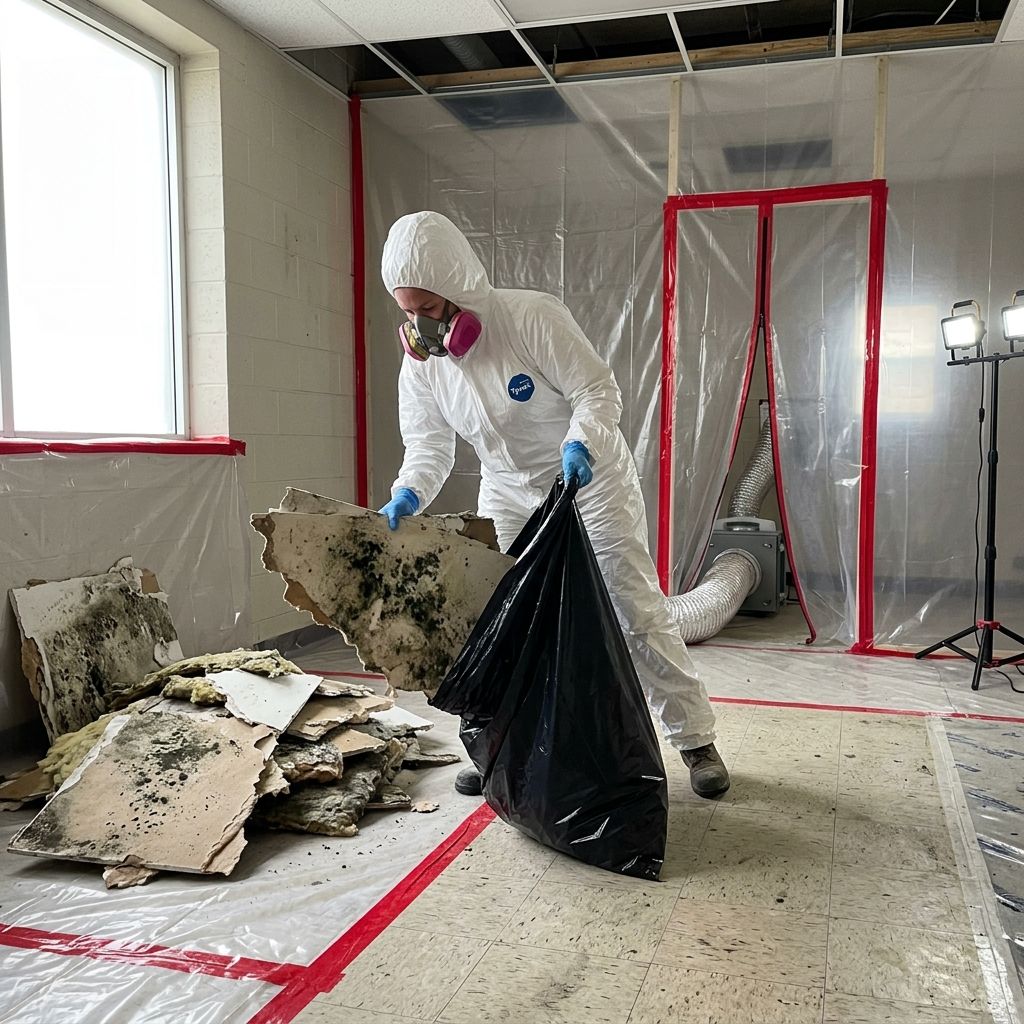
We apply eco-friendly, EPA-compliant mold prevention treatments across all affected surfaces before any rebuilding begins. For historic New Hope properties where original materials are part of the building's character and value, we document the condition of all affected elements before any removal takes place. Every job includes detailed photo documentation and moisture logs formatted for insurance submission, which is especially important for homeowners navigating claims tied to named Delaware River flood events.
Ready to start your recovery? Request your same-day flood assessment in New Hope today.
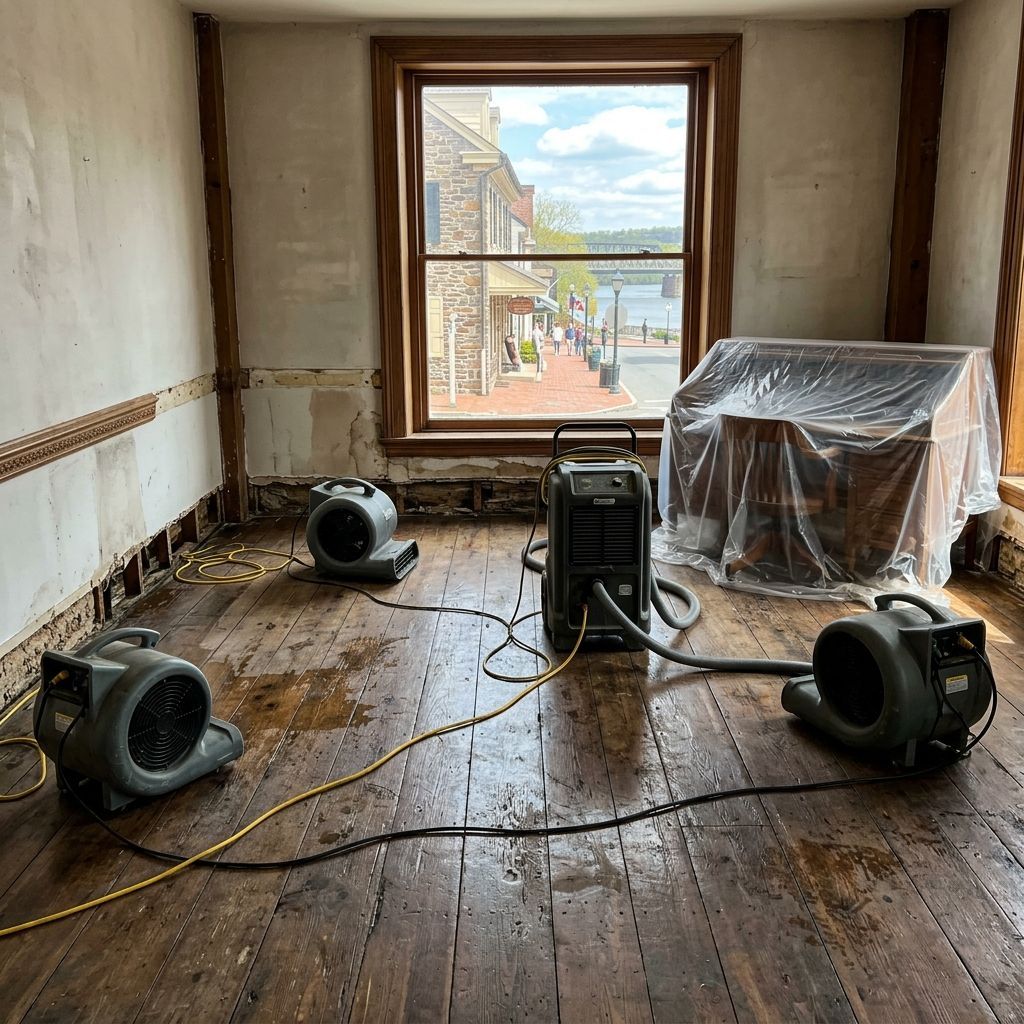
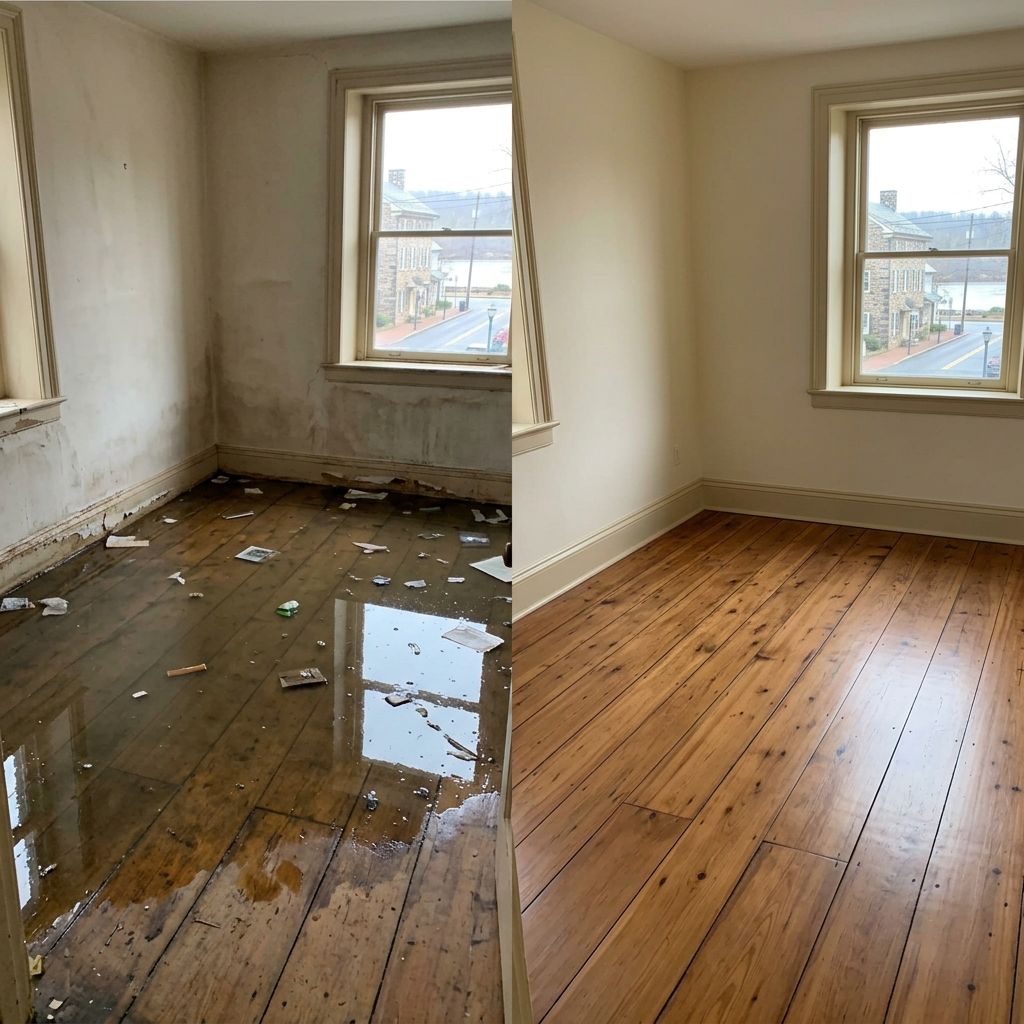
Count on C&J Environmental for Flood Restoration in New Hope, PA
Customer Satisfaction
Our satisfaction guarantee applies to every New Hope flood restoration job. If the work does not meet the agreed scope, we return and make it right. No argument, no delay.
Built on Repeat Business
[STAT NEEDED]% of our New Hope clients call us again. That return rate reflects 31+ years of serving flood-affected properties in communities along the Delaware River.
Full-Scope Flood Restoration
We bring industrial extraction, thermal imaging, commercial drying equipment calibrated for historic construction, mold prevention treatment, and insurance documentation to every New Hope job.
Insured and Accountable
We carry full liability insurance and confirm every warranty in writing. New Hope property owners always know what is covered and for how long before we start.
Your Easy 3-Step Process to Your Flood Restoration in New Hope, PA
1
Call Us for Same-Day Response
We arrive the same day for most New Hope calls, assess Delaware River and groundwater sources, and walk you through the full recovery plan before any work begins.
2
Extract, Dry, and Monitor
We extract standing water with industrial equipment, deploy commercial drying systems, and use thermal imaging to monitor moisture in historic and masonry construction until all readings confirm dryness.
3
Treat, Remove, and Document
We apply mold prevention treatments, remove unsalvageable materials with care for historic construction, and deliver complete insurance documentation. Call 1-844-620-7505 and we respond the same day.
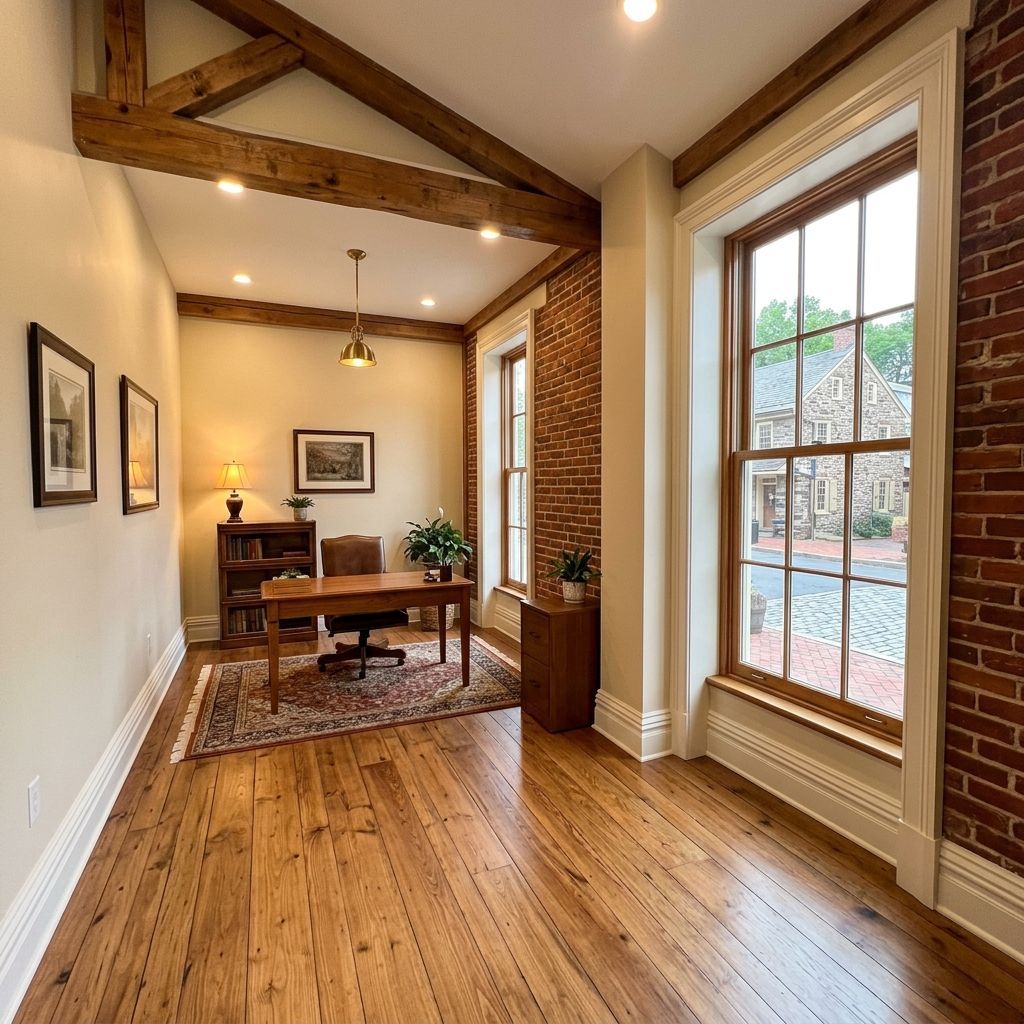
Frequently Asked Questions
Does flood restoration in New Hope require permits?
Flood restoration work, including water extraction, structural drying, and material removal, does not typically require a permit in New Hope Borough. If restoration work uncovers structural damage requiring rebuilding, or involves plumbing or electrical systems, applicable permits from New Hope Borough may apply. For historic properties, any work that affects original construction elements may also require review by the borough or the Bucks County Historic Commission. We advise on all applicable requirements before any structural work begins.How long does flood restoration take in New Hope?
Most residential flood restoration jobs in New Hope take four to seven days from initial extraction through confirmed structural dryness. Historic properties with stone, brick, or plaster construction require longer drying protocols because original materials absorb and release moisture more slowly than modern construction. Properties subject to ongoing groundwater pressure from the canal-elevated water table may require additional monitoring to confirm dryness. We do not close any job until readings confirm the structure is dry throughout.What affects the cost of flood restoration in New Hope?
The primary cost factors are the water source, the construction type, how long water was in contact with structural materials, and the scope of material removal required. Historic properties in New Hope typically require more careful and time-intensive drying protocols than newer construction, and the presence of original materials may affect material removal decisions. We provide a written scope document before beginning any work.Do you handle residential and commercial flooding in New Hope?
Yes. We serve single-family homes, historic properties, multi-family buildings, and commercial structures throughout New Hope Borough. Hospitality businesses, retail property owners along Bridge and Main streets, and property managers in the borough are among our commercial contacts.What warranty do you offer on flood restoration in New Hope?
We back every job with our satisfaction guarantee. If the restoration work does not resolve the moisture issue or meet the agreed scope, we return and address it at no additional cost. All warranty terms are confirmed in writing before work begins.What should I do first if my property floods in New Hope?
Document the water level with photos and note whether the flooding appears to be entering through the floor, through foundation walls, or from surface overflow. In New Hope, this distinction helps identify whether the source is Delaware River surge, groundwater, or canal-related water table pressure. Turn off electricity to the affected area safely. Call us right away. With a canal-elevated water table and a documented history of major river events, New Hope flooding rarely resolves itself, and extended contact time between water and original masonry or plaster construction accelerates the restoration scope significantly.